Archive | Politics RSS feed for this section

Roll of Shame

4 Dec

The following members of parliament voted today in favour of a bill to repeal the Human Rights Act 1998:

  • Aldous, Peter
  • Amess, Mr David
  • Bacon, Mr Richard
  • Barclay, Stephen
  • Baron, Mr John
  • Bingham, Andrew
  • Binley, Mr Brian
  • Blackman, Bob
  • Blunt, Mr Crispin
  • Bray, Angie
  • Bridgen, Andrew
  • Byles, Dan
  • Cairns, Alun
  • Cash, Mr William
  • Clappison, Mr James
  • Davies, David T. C. (Monmouth)
  • Davies, Philip
  • Doyle-Price, Jackie
  • Duddridge, James
  • Elphicke, Charlie
  • Evans, Graham
  • Field, Mark
  • Griffiths, Andrew
  • Halfon, Robert
  • Henderson, Gordon
  • Herbert, rh Nick
  • Holloway, Mr Adam
  • Howarth, Sir Gerald
  • Jackson, Mr Stewart
  • Jenkin, Mr Bernard
  • Johnson, Gareth
  • Jones, Mr Marcus
  • Leadsom, Andrea
  • Lilley, rh Mr Peter
  • Lumley, Karen
  • Main, Mrs Anne
  • McCartney, Jason
  • McCrea, Dr William
  • McPartland, Stephen
  • Metcalfe, Stephen
  • Mills, Nigel
  • Mitchell, rh Mr Andrew
  • Morris, Anne Marie
  • Morris, David
  • Mosley, Stephen
  • Murray, Sheryll
  • Nuttall, Mr David
  • Offord, Dr Matthew
  • Parish, Neil
  • Phillips, Stephen
  • Pincher, Christopher
  • Reckless, Mark
  • Rees-Mogg, Jacob
  • Robertson, Mr Laurence
  • Rosindell, Andrew
  • Shannon, Jim
  • Simpson, David
  • Smith, Henry
  • Spencer, Mr Mark
  • Stewart, Iain
  • Stuart, Mr Graham
  • Tomlinson, Justin
  • Turner, Mr Andrew
  • Vickers, Martin
  • Walker, Mr Charles
  • Walker, Mr Robin
  • Weatherley, Mike
  • Wheeler, Heather
  • Whittaker, Craig
  • Whittingdale, Mr John
  • Wiggin, Bill
  • Wollaston, Dr Sarah

Tellers:??? Peter Bone and Philip Hollobone

The bill was defeated by 195 votes to 72.

Source: Hansard

A backdoor subsidy for local newspapers

23 Nov

Last week I attended the GovDelivery Annual conference at the National Audit Office. The theme of the conference was digital government communications.

One of the speakers was Dr. Jonathan Carr-West, Director of Policy, at the Local Government Information Unit (LGiU), who shared some scary and alarming research on statutory notice publications.

He revealed that across the country councils spend up to £67.85m (or an average of £181,000 per authority) every year publishing public notices in local newspapers. This is not something they have any choice about: councils have a statutory duty.

Of course, local newspaper owners know this and exploit it to the full. There is evidence that the individual cost of publishing a notice can be upwards of three times that for a normal advert, reaching over £20 per column centimetre in some publications.

This is a lot of money, especially when councils are trying desperately to find savings. It is also an outdated system that has been left behind by technological advances. Furthermore, it ignores the fact that the audience – that’s local people like you and me –  is moving away from printed newspapers, to a varied digital media landscape.

Councils know this. They know that printed notices in local papers are inefficient and a waste of money. They know no-one reads them and they know that almost no-one ever responds to them.

I have submitted a Freedom of Information request to Newham council, asking how much they spend on these notices and how many responses they have generated. My aim isn’t to embarrass the council: for once they are wasting money and it’s not their fault! As a citizen it offends me that public money is being handed over as a back-door subsidy to newspaper proprietors. I want information I can give my local councillors to persuade them to lobby the mayor, and for him in turn to lobby central government to change the law on public notices.

The coalition government says it believes in localism and that it wants councils to deliver value for money. Well it could prove it by changing the law to free up councils to decide, based on their local online and offline ecosystem, where best to place public notices. They should de-jargonise the content of public notices so ordinary people can understand what the hell they’re about. And they should allow immediate online response – click a button, fill in a form!

Allowing councils to spend a little bit of money with hyperlocal news and community websites would provide a real boost to the sector and lead to significant growth in the number and quality of these sites, while still delivering large savings.

Taking it one step further forwards, the Department for Communities and Local Government should look at developing a central online portal for publication of statutory notices. You could sign-up for automatic email alerts for new notices from your local authority, or subscribe to an RSS feed. The Scottish Government has already partnered with local authorities to produce TellMeScotland, which would be easy to replicate.

You can see Jonathan Carr-West’s presentation online and download a full copy of the LGiU report on public notices.


Revised proposals for new parliamentary constituencies

16 Oct

Following a public consultation the Boundary Commission for England has submitted revised proposals for new parliamentary constituencies which, if approved, will come into force for the 2015 general election. A key part of the brief was to reduce the total number of constituencies from 650 to 600 and to equalise (as far as possible) the number of electors in each one.

Under these proposals Newham would be split into 3 constituencies, 2 of which would also include wards from neighbouring boroughs.

The new constituences would be:

I’d spend a bit of time explaining what this means in practice if it wasn’t a complete waste of time. Following the Tories’ decision to torpedo reform of the House of Lords these proposals stand almost no chance of being passed. Labour opposes them fundamentally and the Lib Dems are sufficently pissed off about the death of Lords reform (coming after their monumental shafting in the AV referendum) that they will vote them down too.

The Tories may hope that a deal on state funding of political parties (‘cash for seats’) will bring their colaition partners into line, but Clegg must know that would be political suicide. What’s the point of cash for seats if you have no, er, seats?


Met police commissioner asked about Newham uniforms

11 Sep

The House of Commons Home Affairs Committee met today to discuss security at the Olympic Games. Among the witnesses was Metropolitan Police Commissioner Bernard Hogan-Howe.

He was asked by Julian Huppert, Liberal Democrat MP for Cambridge, about the importance of the public not being confused about who was and who was not a police officer and in particular about the new uniforms being worn by Newham’s ‘law enforcement officers’. 

Behind you!

17 Aug

David-cameron-eric-pickles

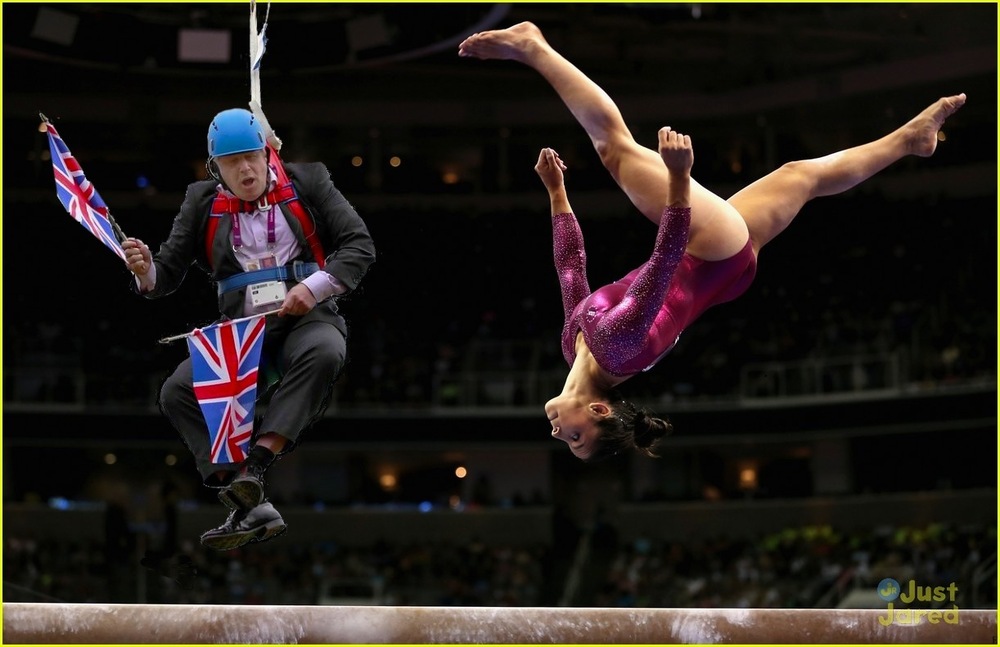
#dangleboris

2 Aug

Us-olympics-gymnastics-women-2012-03

Something of an Internet meme has sprung up since the blond Bullingdonian got himself stuck on a zip wire.

This is one I made, but there’s far more fun to be had over at http://dangleboris.wordpress.com/


Queens Park votes to set up parish council

29 May

Queens Park, in the City of Westminster, has voted to set up its own local, community council:

http://www.guardian.co.uk/society/2012/may/28/peoples-republic-of-queens-park…

Good news for local democracy.

London Mayor & London Assembly Election 2012 – Newham Results

16 May

The ward-by-ward and borough-level results from the recent Mayoral and London Assembly elections have been released.

In the mayoral election, Newham voted (unsurprisingly) overwhelmingly for Labour’s Ken Livingstone. On first preference votes, the results were:

Siobhan Benita (independent) – 1,536 (2.33%)

Carlos Cortiglia (BNP) – 918 (1.39%)

Boris Johnson (Conservative) – 12,139 (18.42%)

Jenny Jones (Green) – 1,630 (2.47%)

Ken Livingstone (Labour) – 47,388 (71.89%)

Brian Paddick (Liberal Democrat) – 1,413 (2.14%)

Lawrence James Webb (UKIP) – 893 (1.35%)


In the London Assembly election for the City & East constituency, the results were:

John Biggs (Labour) – 47,226 (71.18%)

Paul Borg (BNP) – 1,773 (2.67%)

Paul Davies (Communist League) – 447 (0.67%)

Richard Macmillan (Liberal Democrat) – 2,064 (3.11%)

Kamran Malik (Communities United Party) – 3,677 (5.54%)

John Moss (Conservative) – 6,578 (9.91%)

Chris Smith (Green) – 3,078 (4.64%)

Steven Woolfe (UKIP) – 1,505 (2.27%)


For the election of the London-wide members:

BNP – 1,428 (2.15%)

Christian Peoples Alliance – 1,701 (2.56%)

Conservative Party – 6,753 (10.14%)

Green Party – 2,988 (4.49%)

Labour Party – 48,241 (72.47%)

Liberal Democrats – 1,620 (2.43%)

National Front – 247 (0.37%)

House Party – 245 (0.37%)

Trade Unionist & Socialist Coalition – 400 (0.60%)

UKIP – 1,569 (2.36%)

Rathy Alagaratnam – 227 (0.34%)

Ijaz Hayat – 688 (1.03%)


So, what do we learn from all this?

Across London Ken Livingstone polled behind the Labour Party, which is why he lost the mayoral election when his party made big gains in the Assembly. But that didn’t happen in Newham. His vote and the general Labour vote were all but identical. 

That wasn’t true for the the Tories though. Boris was close to twice as popular in Newham as his party. The Conservatives continue to be – in vote terms, at least – the main opposition party in the borough, although their share of the vote was somewhat lower than at the general election (around 10% this time compared to 15% in 2010).

It’s also worth noting that Labour’s share of the vote was up from the 2010 general election, where Lyn Brown (West Ham) took 62.7% and Stephen Timms (East Ham) took 70.4%.

The Liberal Democrats did hopelessly badly. It’s hard to see even a spark of life for a party that finished with fewer votes than the Christians and barely beat UKIP.

These results, along with those from the general and council elections in 2010, confirm that the far-right has no meaningful presence or support in Newham. We should be grateful for that.

How many Trots does it take to change a lightbulb?

15 May

How many Trots does it take to change a lightbulb?

  • 15 on the central committee to issue an edict denouncing broken lightbulbs and calling for change…
  • 10 to hand out “hands off *insert country*” placards to passers by…
  • …and 50 to try to sell them papers…
  • 25 to collect signatures for a petition demanding the government do something about changing the lightbulb…
  • 30 to set up a front group called “Right to Light”…
  • 30 Student’s to set up a front group called “Youth Fight For Light”…
  • …and 15 to form a break-away group demanding a return to candle light.

So about 175 at conservative estimates.


But the lightbulb remains unchanged.


via @majsaleh and @RooftopJaxx on Twitter.


Which kills more, lack of health care or terrorism?

27 Mar

Via Fast Company