Show and tell

13 Jul

Newham Show 2015

Yet more shenanigans at “the Mayor’s” Newham Show.

Just as they did last year. the Focus E15 campaign decided to use a Sir Robin’s publicly funded propaganda fest to draw attention to his less-than-enlightened housing polices. As the event is paid for by residents and held in a public park they have every right to attend and talk to who they want to. But the council’s security people took a different view. Leaflets were confiscated and the campaigners were physically ejected from the site. 

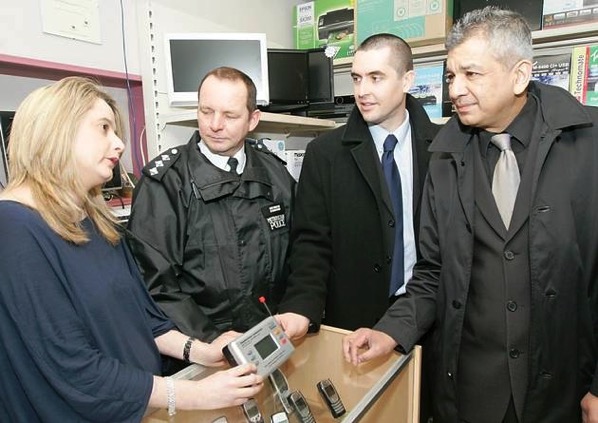
As the picture above shows, things got a bit physical.

And there was no shortage of swearing either, though this year it wasn’t directed at the public.

Cabinet member for ‘building communities’  – and Sir Robin’s new best friend – councillor Ken Clark spotted Ahmed Noor wearing a Newham councillor teeshirt at the community tent. He demanded to know who gave “that bastard a fucking teeshirt.” Although Noor is currently suspended from the Labour party he is still a councillor, but this nicety was beyond our Ken. He then directed a volley of four-letter words at Noor and his friends, leaving no-one in any doubt that  the Plaistow councillor should depart post-haste. And anyone that’s a “fucking friend” of Noor is now Clark’s “fucking enemy”: he would “fucking get him.”

The whole extraordinary tirade was witnessed by members of public and several other Newham councillors. Given that Ken Clark is about twice the size Ahmed Noor – who is also fasting at the moment – they were for once sympathetic to Noor. 

Once again it seems that Sir Robin and his cabinet believe they have they have the right to scream at, abuse and threaten who they like, especially at the Newham Show.  

Baikie Grove

9 Jul

Andrew Baikie

In a press release issued by the council today, Andrew Baikie, Sir Robin’s ‘5-days-a-week’ mayoral advisor for housing is quoted as saying:

We are experiencing an acute housing shortage in Newham and our council housing stock is imperative to helping us tackle this.

Indeed, councillor. Well said.

So it’s mystifying that you are deliberately leaving hundreds of council properties empty on the Carpenters Estate and why you are working with Countryside PLC to sell off ‘surplus’ council homes under the NewShare scheme.

Perhaps you could explain?

How councils blow your millions

6 Jul

Tonight’s Dispatches (Channel 4, 8 pm) is entitled “How Councils Blow Your Millions”

The programme uncovers unknown deals between cash-strapped councils and banks that are costing taxpayers millions of pounds a year. As you might expect, Newham council is featured strongly:

The council with the biggest portfolio of LOBO loans is the London Borough of Newham, which has £563m of these risky loans. Channel 4 Dispatches has obtained a council document which shows that this year the local authority has been paying rates of up to 7.6% on these loans.

Sadly our councillors will be unable to watch, as they will be in a Labour group meeting (except Ahmed Noor, who is suspended). 

Rather than addressing this pressing issue they’ll be talking about a phoney public consultation on spending cuts, the impending fabulousness of the ‘Mayor’s Newham Show’ and the new gold-plated pension scheme for the privileged few (the mayor and his hand-picked circle of advisors) that we’ll be picking up the tab for. 

Channel 4 put out this press release ahead of the broadcast:

Parliamentary committee chairman calls for inquiry into £15bn of risky bank loans taken out by councils across the country

Clive Betts, the Chairman of the parliamentary committee which scrutinises local government has called for an inquiry into £15bn of risky bank loans taken out by more than 200 councils across the country.

These risky and complex loans are known as LOBOs. Some councils like Newham and Cornwall are being charged interest rates of more than 7% on tens of millions of pounds of these LOBO loans at a time when base rates are at a historic low.

Expensive exit fees imposed on councils by banks like RBS and Barclays mean that councils can’t get out of these loans which can run for up to 70 years.

Dispatches estimate that banks made more than £1bn in upfront profits on these local authority loans.

A former trader at Barclays Capital told Dispatches he had “deep moral qualms” about LOBOs and didn’t feel they were “fair” on councils.

For the past three months, Channel 4 Dispatches has been investigating the books of town halls across the country. How Councils Blow Your Millions: Channel 4 Dispatches, airs tonight.

Dispatches presented its evidence to Clive Betts, who said: ‘I think the committee will want to look at this very seriously indeed’. He said he would question ‘whether should these loans be continued, is there any way they can be unravelled and councils given loans at a fair interest rate. ‘

Calculations suggest that if councils could refinance at today’s rates they could save taxpayers £145m this year alone – or almost three quarters of a billion pounds across this parliament.Betts has also called for the Financial Conduct Authority to investigate the City firms that give specialist financial advice to town halls on their borrowing.

Dispatches uncovered evidence that some council advisers were not only paid by the local authority, but earned commission from City brokers if town halls took out these risky loans. Betts described this potential conflict of interest as “outrageous”.

What are LOBO loans?

Few outside a council’s finance department or the City of London know about the existence of these LOBO loans. While these loans might look a bit like a fixed-rate mortgage they are long-term loans tied to complex interest rate derivatives set up by the banks

LOBO stands for Lender Option Borrower Option and unlike a fixed-rate mortgage they have three key twists:

  • The loan contract runs for between 40 and 70 years
  • Councils have to pay huge exit fees if they want to move to a better deal
  • Banks have the option of raising the rates at regular intervals

Most LOBO loans were taken out between 2003-2011 when council officials believed interest rates would stay high. As base rates have hit rock bottom and stayed low, many local authorities have been left counting the cost.

Research suggests about 240 local authorities across the UK have taken out about £15 billion of LOBO loans.

In some cases local authorities have taken up to half a billion pounds of these loans, borrowing from private banks including Barclays and RBS.

MP calls for investigation into LOBO loans

Labour MP Clive Betts told Channel 4 Dispatches that he wants his committee to investigate these loans and would like to explore whether there are grounds to unravel these deals

He has also called for the Financial Conduct Authority to investigate the behaviour of City firms that offer local authorities specialist financial advice. Dispatches has obtained evidence that as well as being paid by councils some of these firms earned commission from City brokers if a council took out a LOBO.

Betts told the programme: “That’s outrageous. In the end a council appoints and pays for an independent outside advisor to come in they expect that advice to be independent and not to be paid for by somebody else who is gaining a profit from these loans being set up. I mean that really is scandalous if that’s happened.”

He added: “I think the FCA now ought to investigate this, and if it hasn’t got the powers then the government ought to consider giving it the powers to regulate this in the future.”

Expensive ‘inverse floater’ LOBO loans

There are a number of different types of LOBO loans but currently the most expensive for councils is known as the “inverse floater”.

These are LOBO loans taken out by councils that have tied interest payments to a complex formula designed to reduce a council’s interest payments if rates go up.

However, as base rates have fallen and stayed low some councils have ended up paying high rates of interest.

Channel 4 Dispatches has established that at least 12 councils which have the most expensive LOBO loans include Cornwall and Newham. Most of these have “inverse floaters” taken out with RBS.

The council with the biggest portfolio of LOBO loans is the London Borough of Newham which has £563m of these risky loans. Channel 4 Dispatches has obtained a council document which shows that this year the local authority has been paying rates of up to 7.6% on these loans.

Banking whistleblower speaks outA former banker with Barclays Capital, Rob Carver, has spoken out about his “deep moral qualms” with LOBO loans.

Carver used to work on Barclays Capital’s Exotic Interest Rate Derivative Desk . He didn’t deal with councils directly, but millions of pounds of Lobo contracts passed across his desk.

He says: “I didn’t feel that the trading we were doing was fair. I didn’t feel that they [councils] understood the business that they were getting in to, and I didn’t think ultimately it would be a very good deal for the – the local taxpayers of that authority.”

‘Conflict of interest’?Channel 4 Dispatches also hears evidence that some City consultants giving councils specialist financial advice on their borrowing earned commission on LOBO loans that a council took out.

We’ve learned that as well as being paid by councils, some advisors earned commission from city brokers if the council took out a LOBO.

Mark Pickering previously worked for Sector, a firm of council advisers which earned these commissions.
He felt this was a potential conflict of interest.

Asked whether Sector earned commission on LOBO deals, Mark Pickering says: “Yes, it did go on during my time at Sector…. I felt pretty uncomfortable and that’s why I sought to do something about it by setting up an independent alternative.”

Mark Pickering left Sector and set up a rival firm, which doesn’t take commission. His firm , Arlinglcose, does not advise councils to take out LOBO loan.

He said: “it’s rare to find a situation which the balance of the benefits have seen to fall favourably on the local authority.”
Capita, which owns Sector, told the programme:

  • they ‘strongly refute any allegations of inappropriate business activities’
  • We provided ‘generic, factual, comparative information to local authorities regarding their funding options’
  • ‘We did not and do not direct local authorities to seek funding from any specific organisation”

Right to Replies

A Barclays spokesperson told Channel 4 Dispatches that these loans have helped councils:

  • ‘build new schools, roads and parks. They are straightforward, fair and easily explained’
  • ‘The average interest rate was about 4.5 %, typically cheaper than the public sector loans available’
  • ‘It is untrue lobo loans work against the best interest of the local authority’

At RBS recent AGM, Channel 4 Dispatches asked the banks chairman, Sir Philip Hampton, if he could justify charging councils, high interest rates for LOBO loans.Sir Philip Hampton says:‘It’s very difficult to talk about specific interest rates attached to specific asset classes… the rates go up and down, sometimes we do quite well with interest rates spreads and sometimes we do really badly – that’s the nature of banking. So I don’t think, we don’t have any mechanisms for separating out councils for any particular treatment, I don’t think we’ve got the market power to do that.’

Councils say the LOBOs they took out had lower interest rates than government loans and that on average that’s still the case.

Newham council told us it’s made ‘£65 m of savings’ on its borrowing since 2002 and that it’s ensured its ‘ borrowing protects the council’s finances from …different interest rates’. It added that after refinancing its debts between 2002 and 2009 its interest payments were halved. They also say they comply with accounts and audit regulations.’

Cornwall Council told us they take expert financial advice and: ‘We are happy our portfolio provides value for money and protects against the risk of fluctuating interest rates ..two LOBO rates are higher… due to the extended period of extremely low interest rates that could not have been foreseen.’

The Local Government Association say that LOBOs are legitimate for councils to use but should be assessed as part of their overall portfolio and not judged in hindsight.

Wrong to buy

1 Jul

A Freedom of Information request has revealed that between January 2011 and May 2015 Newham council sold 501 properties under Right to Buy legislation.

These properties had a book value of almost £82 million, but due to statutory discounts the council received just £42 million. 

Analysis of the data shows that the average value of each home sold was £163,224 and the average discount was £79,461, leaving Newham with receipts of just £83,763 per sale.

Sales by postcode were:

Postcode Number Valuation Sale price Discount
E16 94 £14,401,100 £7,189,300 £7,211,800
E12 56 £8,296,500 £3,890,270 £4,406,230
E15 85 £14,586,900 £7,773,458 £6,813,442
E7 45 £7,653,200 £4,092,380 £3,560,820
E6 128 £20,828,995 £10,562,717 £10,266,278
CM13 11 £2,188,400 £1,432,400 £756,000
E13 72 £11,872,350 £5,979,780 £5,892,570
RM13 3 £486,000 £252,300 £233,700
E11 4 £727,000 £346,200 £380,800
E14 1 £245,000 £145,000 £100,000
E18 1 £360,000 £260,000 £100,000
E* 1 £130,000 £41,600 £88,400
Total 501 £81,775,445 £41,965,405 £39,810,040

 * as listed by Newham in the FOI response

Of course, the council can rightly point out that it had no choice but to sell these homes – ‘right to buy’ is the law. But it can’t escape responsibility for other policies that are reducing the stock of social homes in the borough – for example it’s own NewShare scheme to sell off empty council houses on a shared ownership basis and its decision to keep hundreds of properties on the Carpenters Estate empty. Plus, of course, its repeated failure to enforce its own targets for affordable homes in new developments.

With the Tory government determined to expand ‘right to buy’ to housing associations it more vital than ever that the stock of affordable and social housing is increased. Newham has to do everything it can to make sure this happens.

Changing London

30 Jun

Author, journalist and blogger Cory Doctorow is leaving London and taking his family to Los Angeles:

The short version is, we want to live in a city whose priorities are around making a livable place to work, raise our family, and run our respective small businesses. But London is a city whose two priorities are turning itself into a playground for the most corrupt global elites who are turning neighbourhoods into soulless collections of empty, high-rise safe-deposit boxes in the sky; and continuing to encourage the feckless, reckless criminality of the finance industry (these two facts are not unrelated) …

… We’ve seen the writing on the wall: this is not a city for families. It’s not a city for people running small firms. It’s not a city for people who earn their living in the arts. We’ve given it the best we have, and we’re getting out because we can.

On Thursday (2nd July) Forest Gate North Labour party is hosting a public meeting at Coffee7 on ‘Changing London’. The city is in a turbo-capitalist induced death spiral. Unless we take action now London will become a hollowed out zombie city.

Forgetful

15 Jun


Dame Tessa Jowell with the Mayor of Newham, Sir Robin Wales and Cllr Ken Clark (pic: Newham Recorder)

Two more bits of bad news for Councillor Ahmed Noor.

He has now been suspended by the national Labour Party, not just by the Newham chief whip, pending an external investigation into his conduct. The procedure is called “administrative suspension”. He is still a councillor but until the investigation is complete he can’t attend Labour group or West Ham constituency meetings. He can still turn up at local ward meetings, but I gather he’s never much bothered himself with that anyway.

And last week London mayoral hopeful Dame Tessa Jowell toured the borough, accompanied by Sir Robin Wales and his new best friend, ex-London Labour party regional director Cllr Ken Clark.

She was there to inspect the work being done by local enforcement officers tackling ‘rogue landlords.’ Newham’s private rental licensing scheme would be a template for a London-wide initiative under a future Jowell administration at City Hall. Perhaps led by someone with lots of relevant local government experience?

Following the tour Sir Robin said

“The vast majority of landlords are doing their best but some of them are simply preying on the weakest, we have to tackle this issue head on.

“Tessa is absolutely right that we need to crack down on criminal landlords who are exploiting people across London.”

And what better way for Sir Robin to prove his mettle – and avoid potential future embarrassment – than by prosecuting an unlicensed landlord sitting on his own council? Ahmed Noor may find himself on the wrong side of the mayor’s wider political ambition.

Meanwhile an FOI request has been made to Newham council about whether or not Cllr Ian Corbett has declared all gifts and hospitality he has received. Cllr Corbett is a close friend of Noor and they have attended many West Ham matches together.

I wonder if our Cllr Ahmed Noor was the same person who gave the following gifts to Sir Robin Wales back in 2010?

22/12/2010 – One bottle of whisky, one bottle of Champagne and one box of chocolates – valued at over £25; Name of donor: Mr Ahmed Noor 

If so, did he also give any gifts to his friend Ian Corbett that the councillor has forgotten to declare? 

TfL Rail

11 Jun


via Instagram

#MissingType

9 Jun

Stratford Missing Type

Str_tf_rd St_ti_n has lost its As and Os in support of National Blood Week.

#MissingType

Upton downs

8 Jun

That the leaders of Newham council are arrogant, duplicitous and contemptuous of residents will not come as news to most people. But it is rare that their cynical manipulation of the public for their own ends is quite so fully documented as it is in the case of the Upton Centre.

The centre was closed in December 2014

…after specialist engineers advised that the boilers were no longer compliant and the heating system could not be used. Following the closure, a review of the building has been carried out by independent surveyors and engineers who have established that a significant amount of work would be needed to bring the centre back in to use in the short term, including an overhaul of the heating system as well as a complete rewiring of the electrical system.

Works which would extend the life of the centre by 12 to 24 months are estimated to cost £750,000. Refurbishment to the whole building, which would make it accessible and fit for community use for an additional 15 to 20 years would be in the region of £3.5million.

In April 2015 the council started a “consultation” on the future of the centre. This was clearly rigged to deliver the answer Sir Robin and his chums want to hear – that the centre should be closed and the site handed over for redevelopment.

Perhaps a predictable piece of opportunism in response to an unexpected event? Not at all. A report has emerged that shows this to have been planned down to the finest detail.

That report was written in September 2013 by Graeme Betts, then Newham’s Executive Director for Strategic Commissioning and Community, for a meeting of the now defunct Operational Executive. Mike Law has tried unsuccessfully to extract details of this secretive committee via Freedom of Information requests. According to the replies he got, it is not in the public interest to reveal what was discussed and, in any case, the meetings were not minuted and no record of attendance was ever kept.

The aim of Mr Betts’ report was

…to update Members on progress and timescales for the possible closure of the Upton Centre and to secure possession of the One Love centre in the context of a wider development proposal for the site.

As previously reported there are three issues officers are progressing:

  1. The possible closure of Upton Centre as the level of investment required to maintain a safe and reliable service is unaffordable;
  2. Securing vacant possession of the whole site to allow for a future development; 
  3. Regularising occupation of One Love to ensure it does not affect future development options for the Council.

Having considered the options officers are proposing the following recommendations, subject to Member agreement:

  • If there is unscheduled breakdown of boiler or plant the Upton will be closed whilst officers seek to necessary resources to carry out repair
  • the nursery, within the Upton centre would be provided with temporary heating and access to the site to ensure they can continue to deliver services
  • officers seek to secure 2 year “lease” with 2 year development break clause to ensure vacant possession of the site is obtained
  • officers to continue to work on development options with members prior to a wider consultation on the options with the wider community

With a plan in place to close the centre, the council could then move onto to what it wanted to do with the site. Mr Betts sets out “an initial exploration of the redevelopment option”:

The assumptions as to the potential mix of uses on the redeveloped site are:

  • 44 private residential units (10 x 1 bed flats, 12 x 2 bed flats, 8 x 3 bed flats, 6 x 2 bed houses, 8 x 3 bed houses)
  • 0 affordable housing units (0%)
  • 300 sqm NIA nursery
  • 512 sqm NIA community centre 

The report evaluates three options for how this might be achieved, the last of which is the council doing the work itself via its ‘private rental vehicle’, now known as Red Doors Ventures. This was judged to be riskier, but offered the council the best return and greater control in delivering the project quickly.

All that remained then was to convince the public that this was all in their best interests. The section of the report dealing with ‘Communications Considerations’ is worth quoting at length:

…there needs to be clear and simple messaging around how and why decisions have been made about the centre and future steps. The closure of any community facility is always sensitive and its users and the wider community need to feel they have been kept informed and been part of the process. A key lesson learned from the decision to develop Atherton was the need to have coherent messages to develop the wider community understanding of the council’s vision and also to ensure the council could demonstrate openness in its decision making.  

Once future plans for the Upton Centre are determined, all communications would include reference to the development options and, if appropriate, residents and users invited to input into these options.  

If a decision is made to close the facility due to unscheduled maintenance, communications would focus on the following messages:

  • Financial state of local government finance means Newham has to make tough decisions
  • No final decisions about the site have been made and Newham will consult with residents as options are developed
  • The condition of the building is in a significant state of disrepair
  • There are a range of other facilities that people can access

Unless critical to the timeline for the future of the site, it would be unwise to begin proactive communications regarding the closure of the centre until the future of the site as a whole has been determined. This would avoid creating any unnecessary concern for users. However reactive messages would need to be prepared should the information become public.

The cynicism is breathtaking – don’t tell residents anything until future plans for the site are determined; then tell them no final decisions have been taken. The consultation process is a fig-leaf to persuade residents that they have been kept informed and part of the process.

In the end the boilers at the Upton Centre declined to play their part and failed to ‘unexpectedly’ break down. So the council got in some ‘specialist consultants’ to tell them they were no longer safe or compliant, necessitating the shut down of the heating system and the closure of the centre. That this happened in the middle of winter is no coincidence.

When the outcome of the consultation is published there will be no surprises. The recommendation will be for the Upton Centre to be torn down and replaced with housing for private rent at full market rates. There will be no social housing on the site. And precious little for the local community.

Better late than never

5 Jun

Six months after I submitted it, my FOI request on the East Ham Town Hall fiasco has finally been answered.

Here’s what they had to say, with my original questions and some additional commentary:

1. [Could you please tell me] Why item 11, East Ham Town Hall Campus Update, for the cabinet meeting held on 17th July 2014 was withdrawn? 

Response – The report to Cabinet was withdrawn in July 2014 to allow for all required information to be obtained and collated. 

Comment: This response suggests the problems were known about – if not yet quantified – at least as early as July 2014, but the September cabinet meeting was the first time elected members were told. Does this square with the mayor’s repeated assertion that action was taken as soon as the problems came to light?

2. Is there a steering committee for the East Ham Town Hall Campus (EHTHC) redevelopment project, as there is for the re-build of the Atherton Centre in Forest Gate?


Response – An East Ham Campus Programme Board was established in November 2014 and they convene on a monthly basis. Prior to this Board being established it was simply called a programme board. 


Comment: The only difference appears to be the capitalisation in the name. When was the (lower case) programme board established?

3. If so, please provide a list of all current and past members of the EHTHC steering committee, the organisations they represent and the dates of their membership. Where members are council officers, please state the department or directorate for which they work.

Response – All members of the Programme Board are LBN officers. The Chief Executive chairs the meeting and representatives from the following services are members of the Board:

  • Kim Bromley-Derry – Chief Executive
  • 
James Thomas – Director of Commissioning (Children’s Services)
  • 
Siobhan Fry – Principal Lawyer

  • Paul Durrant – Senior Business Partner Strategic Commissioning and Community

  • Deborah Hindson – One source MD

  • Mark Butler – Director of Asset Management Services

  • Gary Bird – Interim Head of Communications 


Comment: That’s the current membership; who was on the original board? In evidence to Overview and Scrutiny (OSC) Kim Bromley-Derry insisted no membership list was kept. This answer is consistent with that, but I remain sceptical.

4. Please provide a list of dates of meetings of the steering committee, along with copies of agendas and minutes. 


Response – Please find attached the following: 


  • 12th November 2014: Agenda states 10th November but held on 12th 
  • 25th November 2014
  • 
1st December 2014

  • 12th January 2015 
  • 
9th February 2015: No agenda was despatched for this meeting 
  • 16th March 2015 


Please note that the name of a junior officer has been redacted.

Comment: Again, these are meetings of the new (upper case) Programme Board. Kim Bromley-Derry said at OSC no minutes were kept of the old board. But reports submitted to it were used to compile the report Cabinet received at their September meeting, so there was some documentation. Perhaps OSC should ask to see it.


5. What project management framework does Newham work within? (e.g. PRINCE2, PMBOK, etc.) 


Response – Newham Council has recently developed a new Project management methodology called MAPP (Managing and Achieving Programmes and Projects) which is embedded in an automated ICT solution called Verto. This work has evolved into the implementation of a corporate PMO. MAPP methodology and Verto system are mandatory to use in every new project at Newham. 


Comment: The clear implication here is that Newham had NO project management framework in place until now. This is truly shocking.

6. Please provide a copy of the project charter and the project initiation document (or their equivalents in the project management framework you use) for the EHTHC redevelopment project 
 

Response – As this project was initiated before the introduction of MAPP, these documents are not available. 

Comment: To someone who has worked in public sector project management this is simply unbelievable.

7. Which mayoral advisor’s portfolio currently includes oversight of the EHTHC project? 


Response – As this project crosses over a number of portfolios, Sir Robin Wales and Councillor Lester Hudson have oversight.


8. Which mayoral advisor’s portfolio included oversight of the EHTHC project prior to the election in May 2014? 


Response – Councillor Conor McAuley. 


Comment: This will be news to Cllr McAuley. He gave evidence to OSC in March that his involvement was limited to shepherding the initial phase through the planning process. After that responsibility passed to Lester Hudson and Andrew Baikie. 

9. Which of the council’s scrutiny committees has oversight of major building and 
redevelopment projects such the EHTHC and Atherton Centre?

Response – This is dependant on the nature of the scrutiny being undertaken but it is likely that Building Projects would come under Regeneration Scrutiny Commission. However, the work plans of all Scrutiny Commissions are approved by the Chair of Overview and Scrutiny who can determine which commission is most appropriate including Overview and Scrutiny Commission. 


Comment: We know that OSC itself has taken an interest in East Ham Town Hall, but only after the problems were publicly revealed. They  have yet to publish their report, so we will have to wait and see what that has to say.