Tag Archives: Labour

What went wrong – part 3

10 May

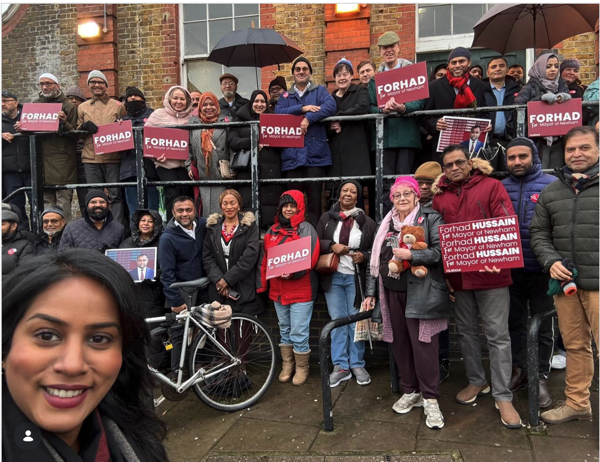
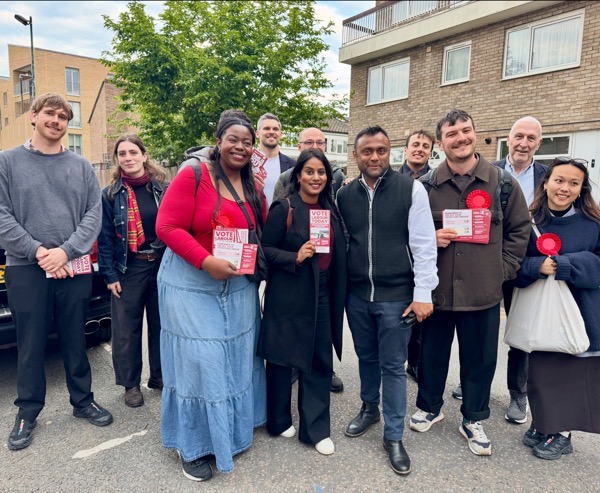
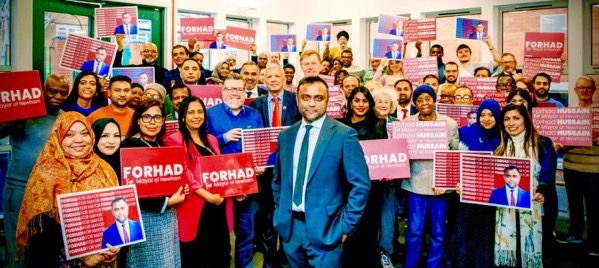
Newham Labour campaigners in Maryland

How Newham Labour Lost the Campaign

Newham Labour’s 2026 campaign was not simply unsuccessful. It was strategically self-destructive.

At the centre of the campaign sat an extraordinary political decision: to make parking, Low Traffic Neighbourhoods (LTNs) and opposition to active travel one of the defining themes of the election.

The flagship proposal — free first parking permits for every household alongside one hour of free parking borough-wide — amounted to a tax cut for motorists unprecedented in London local politics. No other borough currently offers such a policy. Nor does any major London political party advocate something similar.

The policy was introduced without meaningful consultation with sitting councillors or candidates, despite the campaign simultaneously criticising the Fiaz administration for failing to consult residents. More importantly, it fundamentally misread both the borough’s politics and Labour’s own electoral coalition.

Rather than neutralising anti-LTN sentiment, Labour instead gave salience and legitimacy to exactly the political terrain on which the Newham Independents wanted the election fought. Parking and LTNs became central campaign issues because Labour itself elevated them into central campaign issues.

This was politically disastrous.

As one now ex-councillor put it on X “Imitating the [Newham Independents] was such a bad move. We needed to stand out as different – and we didn’t.”

Grievance politics around LTNs and motorists tends to work best for insurgent outsider movements positioning themselves against “the voice of people” and “the establishment”. It is far harder for the incumbent party to wage that kind of campaign without simultaneously undermining its own credibility and record in office. 

Labour ended up in the absurd position of validating anti-council narratives while being the council.

At the same time, the campaign alienated a significant part of Labour’s own progressive and environmentally conscious voter base, particularly in the north and west of the borough. Stratford, Maryland, Forest Gate and parts of the Royal Docks contain large numbers of younger, graduate and environmentally minded voters who are generally supportive of active travel, clean air measures and safer streets.

Instead of consolidating those voters, Labour antagonised them.

The campaign repeatedly signalled hostility toward active travel schemes. LTNs and Healthy School Streets were discussed with open contempt. A Labour Group motion reportedly sought to halt new schemes. Candidates were discouraged from publicly defending them. Even support for clean air and cycling infrastructure became politically sensitive within the campaign.

The rhetoric often descended into culture war politics. “Middle-class elites”, lattes and Waitrose deliveries became recurring themes despite the obvious absurdity of deploying anti-metropolitan populism in one of London’s fastest-changing inner-city boroughs.

Meanwhile, the Greens understood precisely where Newham’s political trajectory was heading.

Rather than attempting to fight every seat, they focused on carefully selected target wards and expanded cautiously only as momentum grew. Their campaign was disciplined, strategically coherent and aligned with the demographics of the areas they were contesting.

Crucially, they openly defended active travel policies, including the Woodgrange and Capel Road LTN, while advancing policies such as weight-based parking permits that reflected a coherent environmental and urban policy framework.

The electoral results demonstrated the consequences of Labour’s strategic failure.

The Greens comprehensively held Stratford Olympic Park and then won Maryland, Stratford and Forest Gate South from Labour. In Forest Gate North, they topped the poll and secured one of the ward’s two seats.

These were not random losses. They reflect a political realignment already underway within parts of Newham. 

Labour had convinced itself it could tack sharply right on environmental issues because eco-conscious, socially liberal and younger voters had nowhere else to go. The campaign proved otherwise. The fact that the Greens won the two wards that include both the (allegedly controversial) West Ham Park LTN and the much-consulted-on-but-as-yet-undelivered Woodgrange /Capel LTN should give the new administration a clue as to what voters actually care about. 

The Newham 65 blog captured it perfectly: Forhad elected, but LTNs win

Operationally, matters were no better. The campaign was highly centralised and overwhelmingly focused on the mayoral candidate himself. Much of the literature delivered across the borough concentrated almost entirely on his personal story and profile rather than on local candidates or ward-level campaigns. Perhaps that focus explains why Labour retained the mayoralty while losing control of much of the council chamber. The campaign appeared structured around a presidential-style contest rather than the realities of fighting multiple hyper-local elections simultaneously.

The organisational culture reflected this centralisation. On polling day itself, candidates were reportedly instructed not to organise their own leaflets or canvassing operations locally, but instead to travel to a small number of central campaign hubs to collect literature and information about which polling districts to target. They were only given enough material for a limited number of rounds before having to return later to collect more. In practice, some candidates wasted significant time travelling back and forth during the most important day of the election campaign — time that could have been spent getting the vote out.

Basic campaign discipline also appeared absent. One Labour member remarked after the election that he had been canvassed four separate times by the same candidate despite already displaying a large Labour poster in his window. As he put it, the “basic tradecraft” of campaigning seemed to have disappeared.

Despite significant social media activity, much of Labour’s online output also appeared amateurish and unfocused. Campaign training around data collection and targeting quickly gave way to optimism bias and poor strategic discipline. Labour behaved as though nearly every ward remained competitive, with little meaningful prioritisation of resources despite clear warning signs that substantial losses were likely.

The Greens, by contrast, understood exactly which voters they were speaking to and exactly where victory was achievable.

Ultimately, Newham Labour fought a campaign rooted in nostalgia for an older political coalition that no longer exists. By centring parking and anti-LTN politics, it simultaneously strengthened its opponents’ narrative while fracturing its own support base.

It was not simply a poor campaign. It was a campaign that fundamentally misunderstood the borough, the electorate and the political moment.
What went wrong – part 2

10 May

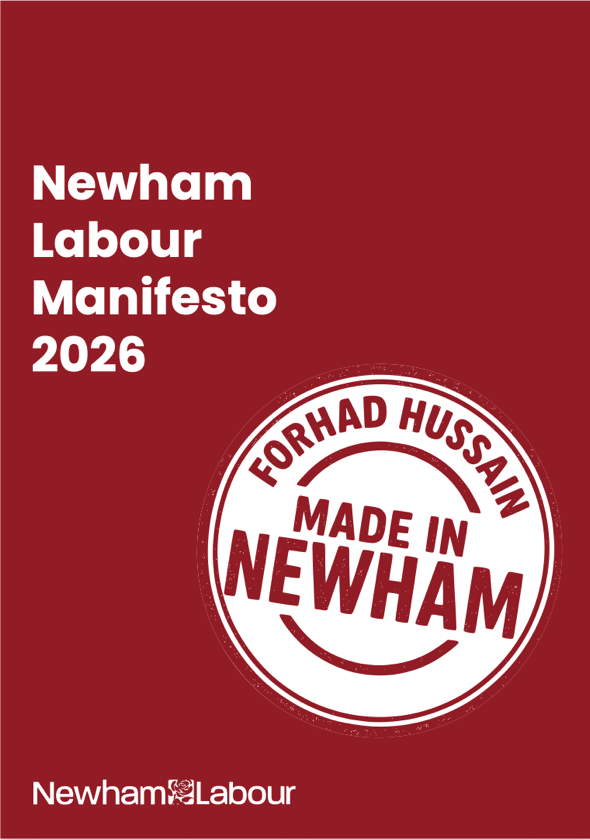
Newham Labour's 2026 manifesto cover

A Manifesto for a Borough That No Longer Exists

Newham Labour’s 2026 campaign revealed a party struggling to understand the borough it governs.

The problem was not simply individual policies, but a deeper strategic failure: Labour fought the election as though Newham were still the borough of the 2000s and early 2010s — politically homogeneous, socially static and electorally secure. As the results on Friday demonstrated, modern Newham is none of those things.

Over the past fifteen years, the borough has changed dramatically. Tens of thousands of new residents have arrived through large-scale development in Stratford, Canning Town, the Royal Docks and beyond. Entire new neighbourhoods have emerged around Hallsville Quarter, Stratford Waterfront and Silvertown Way. Population churn is high. Residents are younger, more transient and more politically fragmented than in previous decades.

This matters electorally. In the past, Newham Labour operated within what was effectively a one-party system. Political competition existed only at the margins. Practices such as “householding” — assuming everyone within a household supports the same party and recording them as such in canvassing returns — reflected both complacency and confidence in Labour’s electoral dominance.

But those assumptions no longer hold. New residents bring different political traditions, expectations and priorities. Voters are less tribal, less predictable and less loyal to political parties than previous generations. Socio-economic class is no longer the principal determinant of party allegiance (it’s education). Newham is now a genuinely competitive political environment.

Yet much of Labour’s political culture is trapped in the old reality.

The manifesto itself reflected this disconnect. Rather than offering a coherent vision for a modern, rapidly changing inner-London borough, it read like a collection of grievances about existing council policy combined with political nostalgia. It’s like the party wished the last eight years hadn’t happened.

Some proposals were poorly thought through or disconnected from policy reality. One pledge suggested seeking “local democratic control” over Newham General Hospital and community health facilities, raising obvious questions about whether the author understood how the NHS actually works. Another called for “culturally appropriate” approaches to diet and exercise without explaining what that meant in practice.

Most striking, however, was the manifesto’s approach to planning and housing policy. Proposals to reduce tall buildings, reshape density policy and significantly increase social housing requirements were fundamentally disconnected from both the London Plan and the economic realities of development viability.

Modern planning policy is not simply an expression of political will. Councils operate within legal, financial and strategic frameworks established through the National Planning Policy Framework and the Mayor of London’s London Plan. Attempting to dramatically increase social housing requirements without regard for viability – while politically desirable – risks stalling development altogether. Restricting density near highly accessible transport hubs directly contradicts London-wide growth policy.

The manifesto seemed unaware of these constraints.

More importantly, it demonstrated little understanding of the political geography of modern Newham itself. The borough now contains substantial populations of younger professionals, renters, graduates and environmentally conscious voters, particularly in Stratford, Forest Gate and parts of the Royal Docks. These groups are not naturally hostile to development, density or active travel. Indeed, many actively support them.

Yet Labour communicated as though these voters either did not exist or did not matter. It discovered on Friday that they very much did.

This reflected a broader institutional complacency. As discussed in the previous post, internal status and factional positioning were seen as more important than engaging seriously with the borough’s changing electorate. Winning Labour selection remained more important than winning public arguments.

The result was a campaign and manifesto that felt strangely detached from modern Newham: politically nostalgic, strategically outdated and intellectually shallow. Perhaps it’s for the best that the party never formally published the manifesto on its own website, which continues even now to display the 2022 platform alongside pictures Rokhsana Fiaz and her cabinet members.

The tragedy for Labour is that this decline was not inevitable. Newham remains a borough with enormous potential for progressive politics: ambitious housing policy, public transport, climate adaptation, clean air, active travel and economic inclusion. But that requires political imagination and strategic seriousness.

Instead, Labour offered a vision rooted increasingly in the past — to an electorate that has already moved on.

What went wrong – part 1

10 May

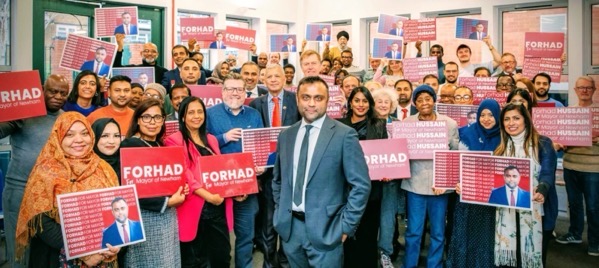
Labour's 2026 candidates

The votes have been counted and the results are in. Labour has retained the mayoralty and remains the largest party on the council, but beneath that headline lies a starker truth: the party has endured its worst ever result in Newham. Forhad Hussain’s victory was achieved with just 30.4% of the vote – a huge drop from the 56.2% achieved by Rokhsana Fiaz four years ago. And the 26 seats on the council is less than half the number they were defending. 

What went wrong?

According to people I have spoken to, the first warning signs appeared long before polling day. They emerged during candidate selections, where factional manoeuvring and internal patronage appeared to matter more than competence, experience or public credibility.

Several deselections left sitting councillors deeply uneasy. A Black female councillor was removed amid a mixture of factional politics and personal hostility, while another was the subject of a strategically time complaint. In both cases, replacements were selected despite appearing less qualified or experienced.

At the same time, councillors who had previously broken the Labour whip — once treated within the party as a serious offence — remained in favour. Even more remarkably, Hanif Abdulmuhit who had expressed climate scepticism, congratulated an independent victory against Labour and campaigned for the Conservatives only two years earlier was re-selected as a Labour candidate. His wife – another former councillor – was also selected, despite a ‘rule’ applied to several others that married couples should not be both selected. ‘Standards’  became flexible when politically convenient.

The result was a perception of hypocrisy and stitch-ups. Increasingly, advancement appeared less dependent on merit than on factional usefulness, loyalty and personal connections. One councillor told me it resembled a patronage system rather than a modern political party.

This is not solely a local problem. Across London local government, experienced councillors are being sidelined while weaker but better-connected candidates advance. But Newham demonstrated the problem in particularly stark form.

At the centre of this culture was a small number of individuals outside of Labour Group exercising influence far beyond any democratic legitimacy. In the absence of a functioning local party – due to the five year-long suspension of the CLPs – London Region presided over selections. Environmentally-minded and left-leaning members were marginalised, while ideological flexibility was rewarded when politically expedient.

And then there’s the extraordinary influence granted to individuals with little meaningful modern local government experience. Despite the complexity of contemporary urban governance — housing delivery, transport planning, climate adaptation and regeneration — major strategic influence, including writing the 2026 manifesto, rested with people whose political instincts are rooted in an earlier political era. 

The consequences extended beyond the selections themselves. A broader climate of intimidation and ideological management emerged during the campaign. Candidates were reportedly discouraged from publicly supporting active travel policies or defending Low Traffic Neighbourhoods and Healthy School Streets. Some feared that even mild dissent from the mayoral campaign’s political direction could jeopardise future opportunities within the party.

This reflected a deeper and long-standing institutional problem. With the local parties suspended there is no space for ordinary members to discuss or debate policy. Detached from any sense of what the membership wants or thinks, internal Labour Group politicking became more important than policy or governance. Influence flowed not from expertise, delivery or public persuasion, but from factional positioning inside the party machine. Internal manoeuvring displaced serious political debate.

That culture may once have been survivable in a borough where Labour dominance was virtually guaranteed. But, as this election has demonstrated, Newham is no longer politically monolithic. It is more fragmented, more competitive and more politically diverse than at any point in its history. A party that selects candidates primarily through internal factional logic rather than electoral credibility is ultimately selecting for decline.

What emerged during these selections was therefore not merely a series of isolated controversies, but evidence of an internal political culture that had become insular, complacent and detached from the borough it seeks to govern.

Disclosure: I applied to be a Labour candidate at this election and was unsuccessful. The panel declined to pass me on the basis of two social media posts in which I criticised Keir Starmer (here and here). Feel free to judge the above accordingly.

Desperate Times in Royal Docks

3 May

Cllr Steve Brayshaw

A row has broken out in Royal Victoria ward after Labour figures questioned Green candidate Rob Callender over an address discrepancy on nomination paperwork, first reported by On London

Labour councillor and chief whip Steve Brayshaw—who is currently fighting to keep his seat in the ward—reported his Green Party rival to the Metropolitan Police. The accusation? “Election fraud” because Callender’s nomination papers listed his home as “address in Royal Victoria,” while the electoral register places him a few streets away  in the neighbouring Royal Albert ward.

Callender has strongly denied any wrongdoing. In a response posted to local WhatsApp and Facebook groups, he clarified that he signed his forms with the standard disclosure “address in Newham.” Somewhere between his signature and the printing of the ballot papers, an administrative or processing error occurred.

“I have never claimed to live in Royal Victoria Ward, but have referred more broadly to the Royal Docks. As an experienced candidate… I can categorically say that I did not submit anything false.”

Callender also pointed out that he lives in the Royal Docks area regardless—just across the ward boundary in Royal Albert. The council has confirmed this doesn’t affect the validity of his nomination.

Honestly, this all feels extraordinarily petty from Labour. Nobody seriously believes voters in Royal Victoria are making their decision based on whether a candidate lives a few streets one side or the other of a ward boundary within the same Royal Docks community. The idea that this is some grave democratic scandal – let alone ‘election fraud’ – is difficult to take seriously.

More importantly, the fact Labour has chosen to elevate such a minor technical issue says a great deal about the political mood in the borough. Royal Victoria is one of the Greens’ stated target seats in this election, and Labour clearly knows it faces a genuine challenge. If the party was confident about its record and support, it would talk about housing, public services, transport and the future of the area — not calling the Met over a nomination form.

This is not the first hint that Brayshaw knows he’s in trouble. Back at the council’s budget setting meeting in February he devoted his entire contribution to the debate to a culture war rant about the Greens.

If the best Labour chief whip can do is play amateur detective with address labels, it’s a clear sign he knows his time in might be up. And that is the real story here.

What are they hiding?

16 Apr

Cllr Simon Rush

In a TikTok video released and then hastily withdrawn yesterday, Cllr Simon Rush repeatedly shouted “What are they hiding?” as he and his colleague Cllr Susan Masters took issue with Green mayoral candidate Areeq Chowdhury’s plans.

They claimed Cllr Chowdhury wasn’t providing any detail about his proposals, particularly moving from the current emissions-based parking charges to a scheme that focusses on a vehicles size and weight. 

Well, the Greens have now published their detailed manifesto, so they aren’t hiding anything. 

But what about Labour? Where’s their manifesto, their detailed plans for the next four years?

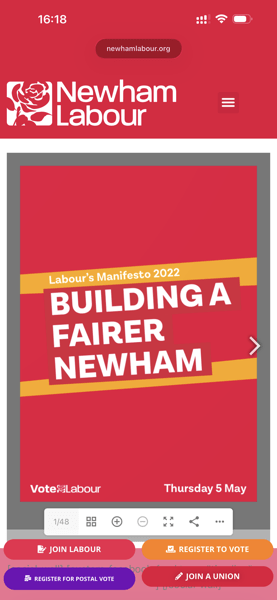
Head over to the local party website and you’ll find this:

Newham Labour's 2022 manifesto

Their manifesto from, er, four years ago.

Where’s the current one, the one Forhad Hussain and 66 council candidates are running on? Nowhere to be seen. There’s three weeks to polling day and postal votes will start landing on doormats any day now. Beyond the brief pledges on a leaflets and few dubious Insta reels, there’s little to no detail about what Labour will do.

As Cllr Rush is so fond of saying, “What are they hiding?”

UPDATE 17 April

Someone very kindly sent me a copy of the Newham Labour manifesto last night. It’s not been published on their website, but you can read it here.

And there’s more…

8 Mar

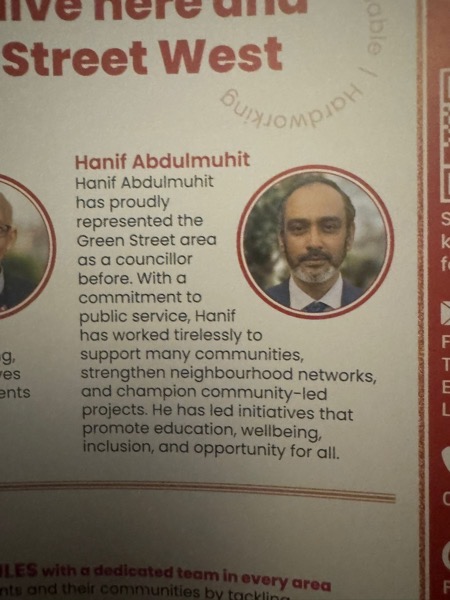
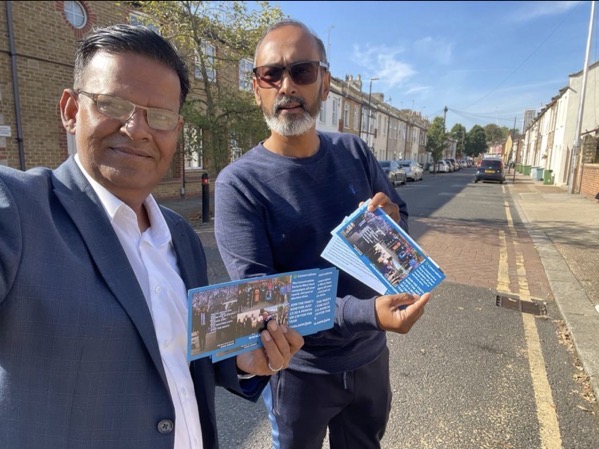
Hanif Abdulmuhit on a Labour leaflet

It seems that I was guilty of a couple of bits of understatement in Friday’s post about former councillor Hanif Abdulmuhit.

First of all, he is not just campaigning for Labour, he is a candidate in Green Street West, the seat he previously held for both Respect and Labour. 

And secondly, his support for the Conservatives went beyond now-deleted social media posts – he joined the party and campaigned for it.

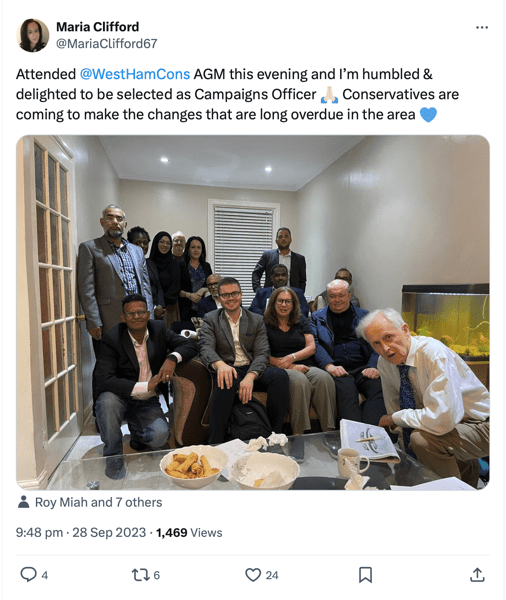
Tory AGM Tweet

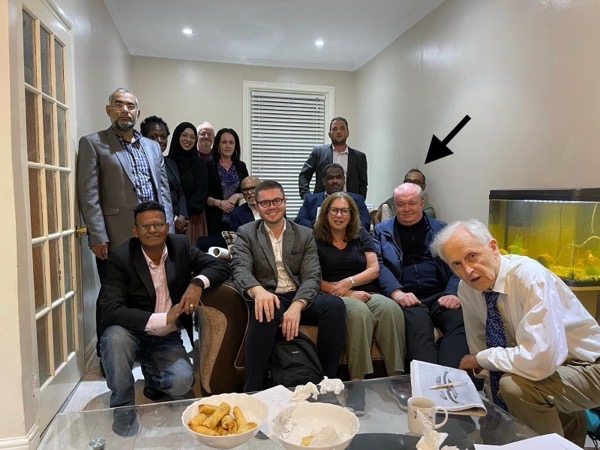
This tweet is from September 2023 and Abdulmuhit is there, at the West Ham Conservative’s AGM. He’s on the right, partly hidden by Tim Roll-Pickering’s head.

An arrow pointing at Hanif Abdulmuhit's head

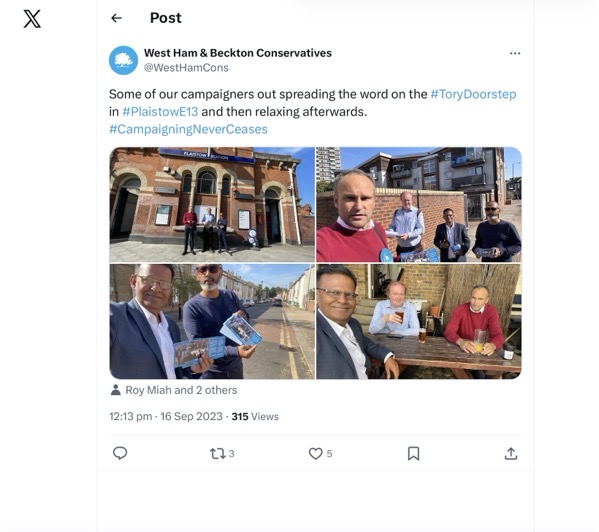
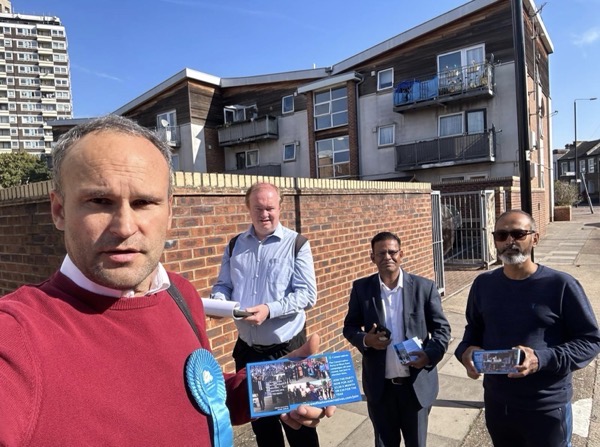
And here he is campaigning for them.

Tory canvas.

Hanif Tory canvassing.

I guess the Labour selection panel’s due diligence on his social media history wasn’t as diligent as it should have been.

A man for all seasons

6 Mar

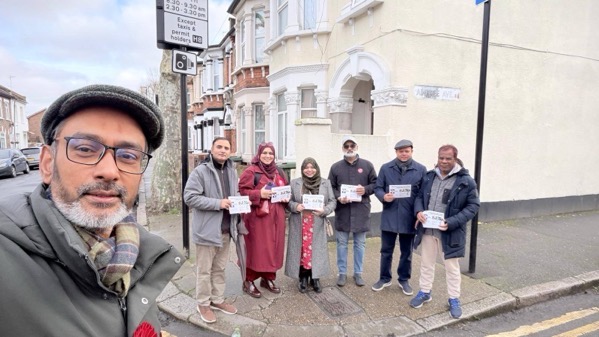
Hanif Abdulmuhit campaigning in 2026

Hanif Abdulmuhit out on the Labour campaign trail

While we’re on the subject of people changing parties – not especially unusual in the small world of Newham politics – let’s talk about Hanif Abdulmuhit, who is currently out campaigning for Labour ahead of the upcoming local election. 

Abdulmuhit began his political life as secretary of Newham Liberal Democrats. He then joined George Galloway’s Respect party, winning a council seat in 2006, defeating Labour incumbents in the process, and standing as the party’s London Assembly candidate for City & East in 2008. As Respect collapsed in on itself, he completed the remainder of his term as a Labour councillor, sat out the 2010 elections, and then returned — fully reconstructed — as a Labour member in 2014. He went on to serve as a mayoral advisor for Building Communities and community lead for Green Street in the administration of Sir Robin Wales.

That second Labour stint lasted until 2022, when he was deselected by the NEC panel charged with picking the party’s candidates. There were suggestions that he was the victim of dirty tricks in the run-up to the selection process, and he took it very badly. In social media posts, subsequently deleted, he announced his support for the Conservatives.

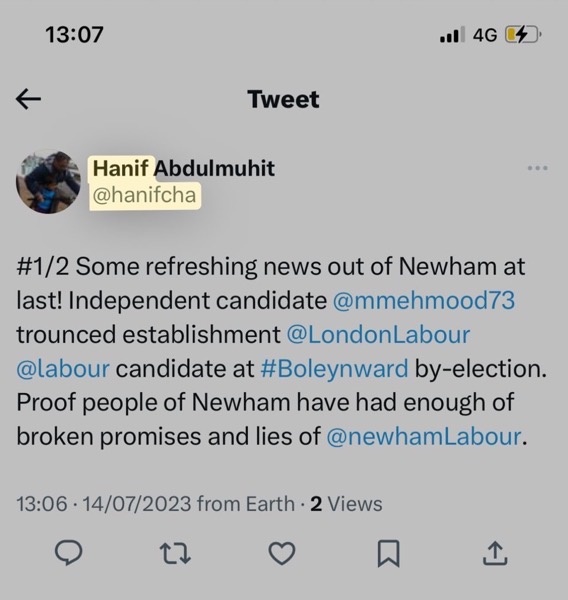
Abdulmuhit’s bitterness towards his former party was on open display in July 2023, when he posted gleefully about Labour’s defeat in the Boleyn ward by-election. “Some refreshing news out of Newham at last!” he wrote, celebrating the victory of independent candidate Mehmood Mirza and describing it as “proof people of Newham have had enough of broken promises and lies of Newham Labour.”

The irony — or the problem, depending on how you look at it — is that Mehmood Mirza is now Labour’s principal opponent in the Newham mayoral election. The same man whose victory Abdulmuhit publicly cheered, whom he held up as a symbol of Labour’s failure and the community’s rejection of the party, is today the candidate Labour most needs to defeat. 

The contradictions do not end with his serial party-hopping. Abdulmuhit was also posting views that sit strikingly at odds with Labour’s national platform and Newham Council’s own stated priorities.

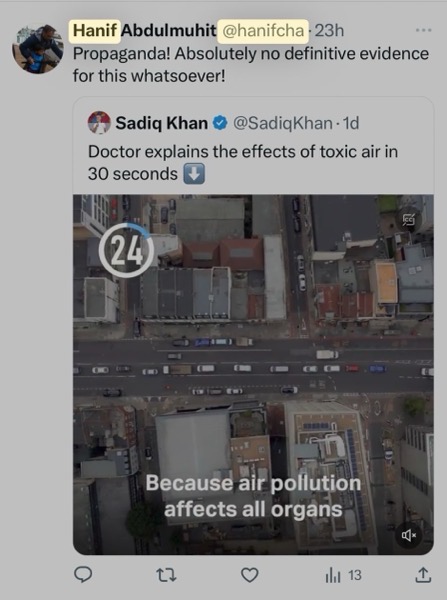
When Sadiq Khan shared a video explaining the health effects of toxic air, Abdulmuhit dismissed it as “Propaganda! Absolutely no definitive evidence for this whatsoever!” — a remarkable claim given that the scientific consensus on the harm caused by air pollution is overwhelming. Newham is one of London’s most polluted boroughs; the health consequences for its residents are not an abstraction.

.

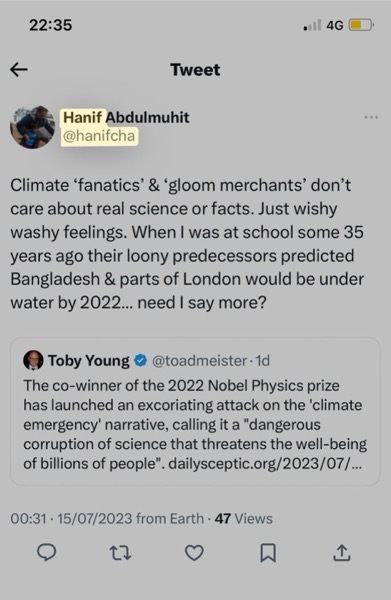
He also amplified a Toby Young article from the Daily Sceptic — a well-known climate-sceptic outlet — approvingly characterising climate scientists as “fanatics” and “gloom merchants” driven by “wishy washy feelings” rather than science. These are not merely heterodox views within the Labour family. They are positions associated with the right flank of the Conservative Party and its outriders, not with a movement that has made clean energy and environmental action central to its offer to voters.

Newham Council has declared a climate emergency and committed to ambitious net-zero targets. Labour nationally has staked significant political capital on its green agenda. A Labour activist publicly aligning himself with Toby Young on climate science is not a minor quirk — it is a meaningful ideological statement.

Hanif Abdulmuhit spent eight years as a Labour councillor before being deselected. He then publicly celebrated Labour losing a council seat, specifically praising the independent candidate who is now Labour’s main opponent in the mayoral race. He has dismissed the scientific evidence on air pollution as propaganda and shared climate-denying content from a right-wing sceptic outlet. He has also, at various points in the more distant past, been a Liberal Democrat and a Respect councillor.

None of this is secret. It is all a matter of public record — or was, before it was deleted along with the rest of his Twitter/X account.

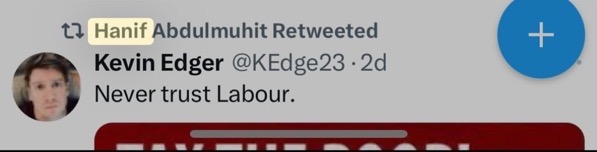
The question worth asking is not why Abdulmuhit wants back in. Political calculation is a constant in Newham, and the motivations of someone who has navigated this many different party loyalties are presumably pragmatic. The real question is why Labour would want him close to its campaign — and, more pointedly, why it would welcome back someone whose loudest recent contribution to Newham politics was cheering on the very candidate Labour is now trying to beat. And who retweeted this kind of thing:

Voters are entitled to know who is working on behalf of candidates they are asked to support. In a contest where Labour’s credibility and trustworthiness in Newham is itself at issue, the company a campaign keeps matters.

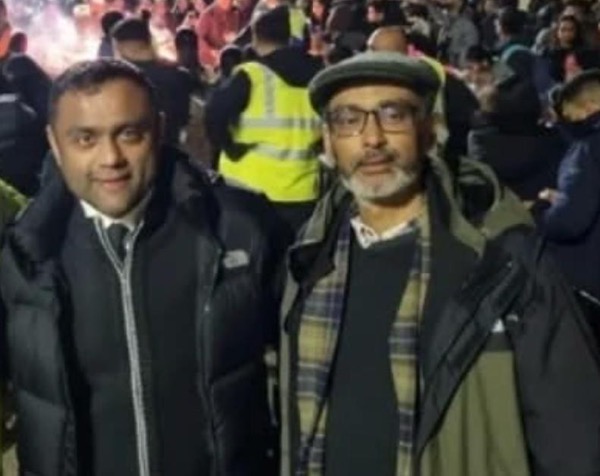
Forhad and Hanif

Having someone whose political journey spans the Lib Dems, Respect, Labour, the Conservatives (however briefly), and back again — and who was publicly delighted by Labour’s embarrassment less than two years ago — seems, at best, an unusual choice.

How a new voting system could end Labour’s grip on Newham

2 Feb

Forhad for Mayor.

Uma Kumaran MP on Instagram

For decades, Newham has been synonymous with Labour dominance. The borough has consistently delivered some of the party’s strongest results anywhere in the country. But as we approach the May 2026 mayoral election, a perfect storm of a changed electoral system and political upheaval threatens to end that era.

The System That Protected Labour (though it rarely needed it)

Until now, Newham’s mayoral elections used the Supplementary Vote system, where voters could express both first and second preferences. If no candidate secured over 50%, second choices were redistributed between the top two. In practice, this rarely mattered — Labour won outright on first preferences in five of six elections. Only in 2006, when George Galloway’s Respect Party mounted a strong challenge, did Labour need second preferences to win.

Had the Tories not abolished this system in 2022 it would have provided Labour with a crucial safety net this year. Progressive voters could have backed the Greens or another party as their first choice, knowing they could return to Labour via second preferences. Even with Labour’s support weakened by the unpopularity of the Starmer government, the party would likely have benefited from transfers from other progressive voters keen to keep less appealing alternatives out.

That buffer has for the time being disappeared. Despite introducing legislation to reinstate the supplementary vote, parliament has not yet passed it into law, so the 2026 election will use First Past the Post. One vote, winner takes all, regardless of whether they achieve a majority.

Historical Strength, Meet Historic Weakness

To understand how extraordinary the current situation is, consider the numbers. In 2018, Rokhsana Fiaz won with a commanding 73.4%. Even in 2022, when her support dropped significantly, she still secured 56.2%.

Historically, Newham Labour’s candidates have outperformed national polling by 25-40 percentage points. For example, when the party polled 29% nationally in 2010, their mayoral candidate won 68% locally. Newham has always been a Labour bedrock.

Fast forward to January 2026, and Labour is polling at a catastrophic 17-22% nationally — the party’s worst position since monthly polling began in 1983. Even with the usual level of out-performance versus the national party, Newham Labour may struggle to hit even 40% this time.

And with the early messaging from Labour candidate Forhad Hussain suggesting he is running against the current mayor’s record rather than the Opposition, that is doubtful. “Labour’s made a mess of it, vote Labour” is s hard message to sell.

The Challengers Emerge

Given the polls and the change to the voting system, this election is genuinely competitive.

The Newham Independents’ candidate, Councillor Mehmood Mirza, represents the largest opposition group on the council with four seats (or is it five?). His populist platform — council tax freezes, free parking, public events, even more free parking, and free sports gear for every child — taps into dissatisfaction over street cleaning, parking charges, and council governance, as well as anger over Labour’s stance on Gaza. Whether his ambitious spending promises can be delivered within a balanced budget is questionable, but the appeal is undeniable. Promises cost nothing, and by the time voters find out he can’t actually deliver them, it’s too late.

The Green candidate, Councillor Areeq Chowdhury, defected from Labour in 2024. His candidacy provides a direct bridge for disillusioned Labour supporters into another progressive option. The Greens already hold the Stratford Olympic Park ward and are targeting council seats in Stratford, Forest Gate and the Royal Docks. They came second with 17.4% in the July 2024 general election in Stratford & Bow, demonstrating organised support across the borough’s younger and more affluent areas. His promise to “ensure we have a clean, green place to live in” will resonate with those voters.

The central structural problem for Labour is that they and their main challengers sit broadly within overlapping political spaces. They share concerns about housing quality, street cleaning, regeneration, and accountability. Despite his regressive policies on climate and tax, Mirza enjoys the endorsement of Jeremy Corbyn, while the Greens have also attracted support on the Left with positive messaging on migration and calls for a wealth tax.

If Chowdhury attracts environmentally-minded and younger voters, while Mirza consolidates anti-establishment and community-based support, Labour’s vote could be eroded from two directions at once.

Reform UK adds another layer of complexity. Newham is not an obvious Reform stronghold. It is younger, more ethnically diverse, and more urban than the areas where Reform has typically done best. Its core base — older, white, socially conservative voters — is relatively smaller here. But the party’s emphasis on social conservatism and cultural issues may resonate with some older and more religious voters who feel detached from Labour’s current direction. Without much in the way of local campaigning infrastructure they secured around 17% in the recent Plaistow South by-election. Reform doesn’t need to win to make a difference because it draws votes from multiple pools: disaffected Labour supporters, residual Conservatives, and general protest voters. Ten or twelve percent could reshape the contest by lowering the threshold for victory.

The Fragmentation Factor

Put these elements together, and the outcome is unprecedented fragmentation and a potentially knife-edge result. Something along these lines is entirely plausible:

  • Labour: 32-40%
  • Newham Independents: 25-33%
  • Greens: 18-25%
  • Reform: 10-15%
  • Others: 5-10%

Labour might win with barely a third of the vote, meaning a large majority preferred someone else. Alternatively, if one challenger consolidates better or is more effective at turning out its vote, the party could lose out entirely.

The Irony of Simplification

Historically, Newham’s mayoral elections were about majorities – often big majorities. In 2026, they’ll be about pluralities. Labour’s dominance was built on strong first-preference support, reinforced by second preferences when needed. Under FPTP, only the first layer remains. Its proponents claim it’s a simpler system, easier to understand. Ironically, it could lead to a result that is more complicated and unpredictable.

For Labour, the task is clear but difficult: hold the vote together in an unfavourable national climate and prevent further defections. Their current strategy, focusing on parking and traffic management, is seriously puzzling. Why add salience to issues that Mirza is actively campaigning on and at the same time risk alienating younger and environmentally conscious voters, for whom the Greens are already an attractive option? 

For the challengers, the dilemma is opposite. Each has a case against Labour, but collectively they risk canceling each other out. Fragmentation may hand Labour victory by default.

Whatever happens, 2026 will produce a mayor backed by fewer people than any of their predecessors. In a borough long accustomed to clear mandates, that would mark a profound shift in how local power is won — and how legitimate it feels. Labour may be about to learn a harsh lesson about the vagaries of first-past-the-post in an age of political volatility.

Candidates assemble!

7 Jan

The three biggest parties in Newham politics have announced their candidates to replace Rokhsana Fiaz as mayor in May’s local elections.

Forhad Hussain and fellow Labour candidates

Labour’s candidate will be Forhad Hussain. He, like all of the party’s candidates, he was selected by a special panel of the National Executive Committee. Hussain previously served as councillor for Plaistow North from 2010 to 2018 after standing unsuccessfully on the Respect ticket in 2006. He held a couple of positions in Robin Wales’ cabinet and chaired the audit committee. I’m not sure what he’s been doing politically for the past eight years, though as the local Labour parties have been suspended for five of them it’s perhaps not surprising his profile has been a bit low.

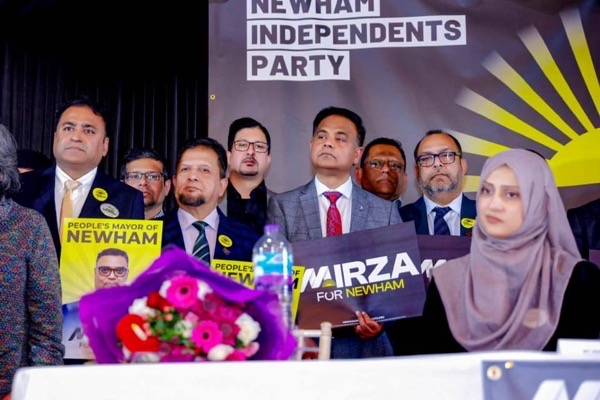
Newham Independents announce Mirza for Mayor

To absolutely no-one’s surprise the Newham Independents will be nominating Cllr Mehmood Mirza as their candidate. I’m afraid I couldn’t get a better picture as both Mirza and his party have blocked me from all their socials. Mirza has been councillor for Boleyn ward since winning a by-election a couple of years ago. He now leads a group of five councillors with, shall we say, diverse political histories (from Corbynites to Conservatives) but united by a sense of grievance with the Labour party and a penchant for owning multiple properties. Mirza was once a candidate for a seat on the party’s NEC and was vice-chair for membership of the West Ham constituency party before being suspended

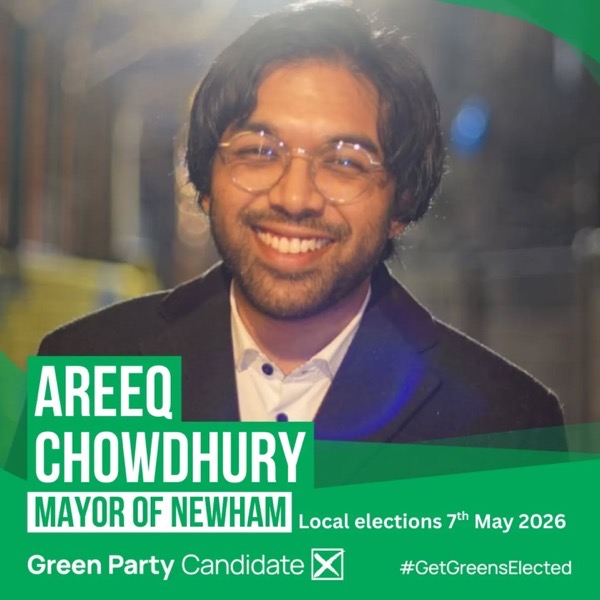
Areeq Chowdhury, Green candidate for Mayor

Newham’s Green party was the official opposition on the council before Mirza’s party turned up. Their two councillors elected in Olympic Park ward were later joined by Areeq Chowdhury after he defected from Labour. Cllr Chowdhury has represented Canning Town North since 2022, where he was a late addition to the slate after a previously selected candidate was dropped.

UPDATE 4 February 2026

Terri Bloore, Conservative candidate for mayor of Newham

According to Who Can I Vote For?, the Conservatives have nominated Terri Bloore as their candidate for mayor.  A quick Google search tells me that Ms Bloore grew up in a rural Leicestershire before studying Public Relations at Bournemouth University and International Affairs at Kings College London. She now works in Corporate & Financial Services and has a particular interest in global sustainability and social impact. There is no announcement on either the East Ham or West Ham & Beckton Conservative Association websites, but a campaign Twitter account has been set up; it has not posted yet.

UPDATE 7 April 2026

Laura Willoughby will be the Liberal Democrat candidate, according to Who Can I Vote for?

So that makes six, including Reform UK’s candidate, about whom I have already reported.

There is talk of another returning candidate from past elections, and maybe the Christian Peoples Alliance will have another go too. I will post a final list after nominations close on Thursday.

So long, farewell

8 Dec

Mayor Rokhsana Fiaz

Mayor Fiaz will be among those departing after the elections in May

The panel tasked by Labour’s national executive to oversee the election of candidates for next May’s elections has completed its work. While we don’t yet have official confirmation of the successful applicants, there are a number of sitting councillors who will be leaving the Labour benches next year:

  • Rokhsana Fiaz, Mayor of Newham since 2018; previously councillor for Custom House
  • Dr Rohit Dasgupta, councillor for Canning Town South since 2018; chair of council and First Citizen of Newham
  • Alan Griffiths, councillor for Canning Town South since 2014, previously represented Park, Forest Gate South and Plaistow North
  • Charlene McLean, cabinet member for Resident Engagement & Resident Experience; councillor for West Ham since 2018, previously Stratford & New Town
  • Simon Rush, secretary of Labour Group; councillor for Plaistow West & Canning Town East since 2022
  • Amar Virdee, councillor for Green Street West since 2022
  • Stephanie Garfield, councillor for Wall End since 2023
  • Joshua Garfield, councillor for Stratford (previously Stratford & New Town) since 2018 
  • Jemima McAlmont, councillor for Wall End since 2022
  • Mohammed Muzibar Rahman, councillor for Green St East since 2022
  • Sarah Ruiz, Deputy Mayor & Cabinet Member for Children’s Services, Education & Sustainable Transport; councillor for Custom House since 2018, previously South, Beckton and Royal Docks
  • Rita Chadha, Cabinet Member for Health & Adult Social Care and Transforming Newham for the Future; councillor for Canning Town North since 2022
  • Anamul Islam, formerly Labour Group chief whip; councillor for Forest Gate South since 2022, previously Forest Gate North
  • Dina Hossain, councillor for Plaistow West & Canning Town East since 2022
  • Carleene Lee-Phakoe, councillor for Plaistow South since 2018
  • Pushpa Makwana, councillor for Plashet since 2018
  • Terry Paul, councillor for Stratford (previously Stratford and New Town) since 2010
  • Winston Vaughan, councillor for Forest Gate South since 2002, previously New Town
  • Dr John Whitworth, Cabinet Member for Air Quality, Climate Emergency & Environment; councillor for West Ham since 2014, and previously 2002 to 2006
  • Nur Begum, councillor for Little Ilford since 2022, sitting as a Newham Independents Party councillor since learning of her deselection

Of course, there are four other councillors who were elected for Labour in 2022 who no longer have the whip. Belgica Guana (Canning Town South) and Lewis Godfrey (Green Street West) sit as ungrouped independents; Areeq Chowdhury (Canning Town North) is now with the Greens and Zuber Gulamussen (Plashet) is the chief whip for the Newham Independents.

Update: Simon Rush has been selected as a candidate in Custom House ward; Rohit Dasgupta has been reselected in Canning Town South.