Archive | Politics RSS feed for this section

Making public health matter

25 Feb

IBA3

According to Public Health England the health of people in Newham is “varied compared with the England average”. Which is a polite way of saying it’s mostly worse. Specifically:

  • Deprivation is higher than average and about 24,000 children live in poverty.
  • Life expectancy for both men and women is lower than the England average.
  • Within the borough, life expectancy is 5.0 years lower for men and 5.5 years lower for women in the most deprived areas than in the least deprived areas.
  • Over the last 10 years, early death rates from cancer and from heart disease and stroke have fallen, but the latter remains worse than the England average.
  • In Year 6, 25.6% of children are classified as obese, worse than the average for England.
  • Rates of sexually transmitted infections, smoking related deaths and hospital stays for alcohol related harm are worse than the England average.
  • The estimated level of adult physical activity is worse than the England average.

But on the positive side:

  • Levels of GCSE attainment, alcohol-specific hospital stays among those under 18, breast feeding and smoking in pregnancy are better than the England average.
  • The estimated level of adult ‘healthy eating’ is (surprisingly) better than the England average.
  • The rate of road injuries and deaths is better than the England average.

Public Health England identified the priorities in Newham as: tackling heart disease and stroke; immunisation; maternity and early years care; cancer; circulatory diseases; and long term conditions.

The Health and Social Care Act of 2012, which heralded the current unnecessary and damaging reorganisation of the NHS, also transferred responsibility for local health improvement to local authorities, including Newham. The transfer ctually took place on 1 April 2013, some nine months after the Act received Royal Assent.

So Sir Robin had a bit of time to think about how he might approach this and to include a bit about public health in his ‘Mayor’s Contract’. After all, what could be more important to improving the lives of Newham people than making them healthier?

Can you guess how many times does the word ‘health’ appears in the Mayor’s Contract 2013/14? Zero. Not even once.

I suppose we shouldn’t be surprised. Improving health is hard work, it takes a long time and it’s really difficult to move the needle even a little. Most of the evidence of success will come years down the line, long after Sir Robin has moved on to City Hall or the House of Lords. And it’s not the kind of work that lends itself to photo opportunities.

But it is vitally important. In May Sir Robin is asking for another 4 years in power. His councillors and those who aspire to join them are already out on the doorstep, pushing leaflets through letterboxes and talking to voters. We must take this opportunity – it won’t come again for another 4 years – to push public health onto the agenda. Ask the canvassers what the Mayor’s proposals are, what he (and they) are going to do make Newham a healthier place.

And if Sir Robin deigns to hold a public meeting or two, turn up and ask him directly.

Twins

6 Feb

Image

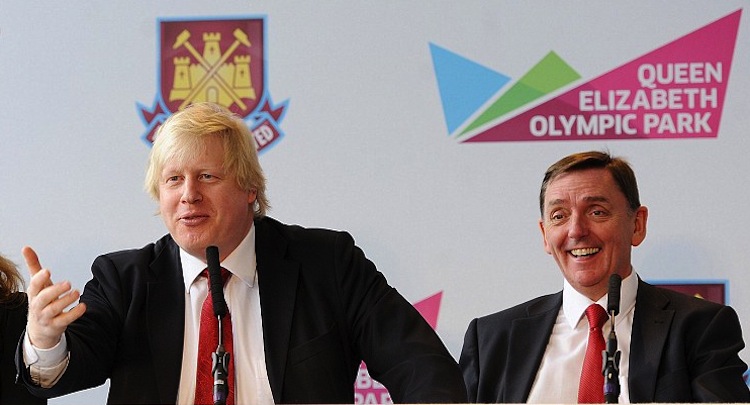
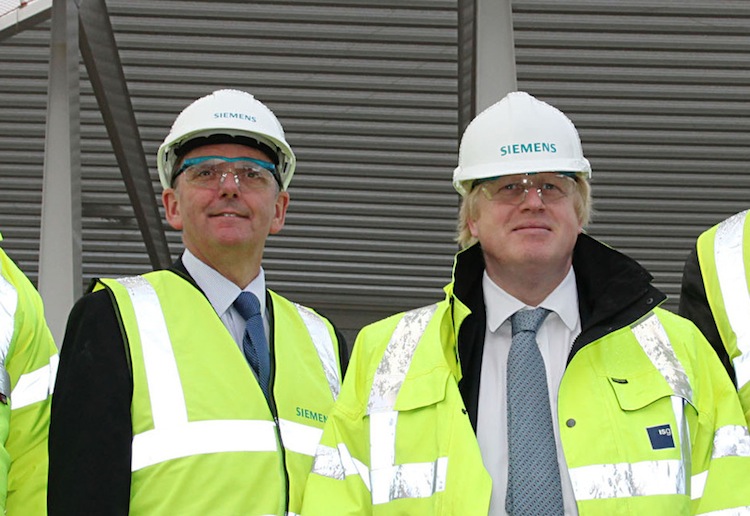
Same suit, same shirt. Even their ties match. And it’s not the first time:

Image

It’s like they’ve been playing in the same dressing up box.

Weird!

Newham’s NHS crisis

9 Jan

West Ham’s MP Lyn Brown spoke yesterday in a debate in parliament on NHS services in London. I’m not normally a huge fan of Lyn’s, but the speech is very good. It makes some excellent points about health inequalities and their impact on local people. It also touches on concerns about the future of A&E services at Newham General. It is worth reading in full:

I want to reflect on some of what my hon. Friend [Karen Buck, MP for Westminster North] said at the beginning of her speech and on the sentiments of a letter to The Guardian before Christmas from GPs, emergency doctors and nurses, midwives, physiotherapists, psychotherapists and NHS trusts. Their plea was for a page to be turned in the way we talk about the NHS. We need to talk about the failures in patient care, but we must also recognise that we have some extraordinary abilities in the NHS to reach and look after our communities as well as they do. Sadly, I have been close to the NHS in the past three years, and I have seen excellence and the pits. However, in general, the people who work in our hospitals do a fantastic job.

I wholeheartedly endorse the sentiments of that letter because I fear that the driver for the relentless daily trashing that the NHS receives comes from base political motivation—the softening up of public opinion so that marketisation and privatisation become acceptable. It will not be acceptable. It is not acceptable now and I do not believe it will ever be acceptable, so let us just stop it.

I am not the only one to mistrust the motivation and outcome of the coalition’s top-down, unwanted and wasteful reorganisation of the NHS. I did a survey of my constituents — I like to find out whether my impressions are the same as theirs — and 97% of those who responded said that the NHS would undoubtedly get worse under the new system. When they were asked about their main concern, 60% thought that the money intended for NHS staff and services would end up as profit for private companies. My constituents are very astute.

I want to turn to local circumstances.

In 2006-08, life expectancy for men in Newham was 75.8 years, lower than the London average of 78.2 years. In the same period, life expectancy for women was 2.3 years below the London average at 80.4 years. Even within my borough, there are variations that make the local situation much more complex and challenging. Life expectancy in some wards is 8.1 years shorter than in others. That is massive.

In primary care, the recommended ratio of GP provision is 1.8 GPs per 1,000 of population. In Newham, the ratio is appalling and equates to not much more than half that, at 0.56 of a GP per 1,000 of population. It is small wonder that in my survey, 35% of respondents reported that it is never easy to get a GP appointment, and just 10% said that it is always easy. Many practices—too many—are operated by single GPs, so it is no surprise that the patient experience in Newham is the worst in north-east London.

The primary care trust, before its abolition, had a clear plan for tackling that challenging situation and I enthusiastically endorsed and participated in it. Now, there are no mechanisms in place to root out poor practice and promote the best. I would like to hear from the Minister how she will ensure that Newham has the number of GPs to which we are entitled, and that we have performance and outcomes that are the same as other areas of London.

Incidentally, I would be interested to hear whether other hon. Members here are experiencing the new phenomenon that we have in Newham: dial a diagnosis. When people contact their GP to arrange an appointment, they are initially offered a telephone conversation with the GP. Is that because GPs must bolster the failing 111 non-clinical service, which is now contributing to the difficulties of our A&E departments? Is it to save money, to sift out or deter patients or to ration GP time? Has there been a risk assessment of what that might entail, and does it contribute to the problems that my community is facing? Again, I would like to hear from the Minister about that.

Another statistic from Newham that should be good news is that the incidence rate for breast cancer is 104.6 per 100,000 of population, significantly lower than the UK average of 123.6. However, disturbingly and distressingly, the percentage of women alive five years after diagnosis—the five-year survival estimate—is, at 75%, also significantly lower than the UK average of 83.4%. The reason in part is the take-up rate of breast screening services, but there is anecdotal evidence of women who were part of Barts hospital’s preventative health services being encouraged to go away and become part of the general population, and to present sometime in the future. That encouragement not to continue to attend for breast screening gave a rosy picture of health needs.

The London Health Commission, under the chairmanship of Lord Darzi, has a remit that includes healthy lives and reducing health inequalities. I will be interested to hear what the Minister says in anticipation of the commission’s report, and what assurance she can give that the Government will act on health inequalities.
Let me refer to the Barts health care trust, which is the largest in the country and incorporates Barts, the Royal London, Whipps Cross and Newham General hospitals. Our patch is the growing part of London, with growth in population, complexity, the number of homes and, of course, opportunity. I was therefore grateful to hear the hon. Member for Cities of London and Westminster (Mark Field), who made a well balanced speech, talk about resources being sucked into the large university hospitals in the centre. Even though those of us on the far-flung borders of the east belong to the same trust as one of those hospitals, we experience the difficulties he talked about in relation to Romford.

Rumours abound at the moment that Newham General, as part of the Barts trust, is under threat of reconfiguration—a fascinating new word—to secure the viability of the trust as a whole. When I talked to the trust’s chief executive, he told me that the PFI represented only 10% of the trust’s entire budget and that, given that the budget was large, he did not see the PFI as having major consequences for the delivery of services.

However, there is an accusation that the trust is being a little disingenuous in its public statements that the A&E at Newham General will not be closed. Assurances have been sought that there will be no downgrading without full consultation, but those look weak in the face of a shortage of anaesthetists, for example, who are essential to support a viable emergency service.

Almost half of London trusts are struggling to achieve the 95% standard for patients waiting in A&E. Barts trust is just about achieving that target, but that is because Newham General performs well and helps the trust’s overall performance — a good example of how a local acute hospital catering for a place such as Newham can perform well, while larger hospitals struggle. Given that the future of Newham General’s A&E is under threat, the irony of the situation is not lost on me, and nor will it be lost on my constituents.

In that scenario, it is essential that we maintain Newham General as a fully functioning major acute hospital with a full range of services, including A&E and maternity. Given that we are seeing growth out to the east, it would be irresponsible and downright dangerous for us not to do that. It would also be a complete distraction from the absolute priority of putting in place improved, integrated care services in the community and in primary care.

Finally, I seek assurances from the Minister about the funding formula for CCGs being rolled out across England. In the London context, it is shifting resources from inner-London boroughs, with their younger populations, to boroughs further out, which have older populations.

Newham just happens to have the youngest population in the whole of Europe, apart from some tiny canton somewhere that is almost irrelevant. We will therefore lose substantial amounts, while London as a whole is losing 2.3% of its funding to other areas. I would like reassurance from the Minister that the funding formula will fully take account of deprivation, as the hon. Member for Cities of London and Westminster said, as well as of our population’s high level of mobility, with the health problems that brings with it, and diversity, with the specific demands that that puts on health care.

A good year

4 Jan

Ironic lectern caption for a woman who has just been handed a new stadium for free

2013 was a very good year – for Karren Brady.

In March the business she runs, West Ham United FC, was handed prime tenancy of a £600 million public asset in exchange for a peppercorn rent and some vague promises about community engagement.

At the same time, Newham council confirmed that it will contribute £40 million to the cost of converting the stadium for the Hammers’ use – ensuring that Ms Brady and her multi-millionaire employers will bear the merest fraction of the expense of relocating their business to swanky new premises.

In September she received a standing ovation at the Tory party conference when she made a speech introducing chancellor George Osborne,

And to top it all off in December she was awarded a CBE for her “for services to entrepreneurship and women in business.”

Usually, people who rely on public money to get by are branded ‘scroungers’ by the Tories; but when it’s handed out to business people they get standing ovations and medals for ‘entrepreneurship’.

For richer, for poorer (but mostly poorer)

6 Dec

George Osborne claims that the UK economy is recovering and experiencing strong growth, thanks to the austerity policies pursued by the Coalition government since 2010.

But ordinary people can’t see any recovery at all. For them, all they see are stagnant wages and rising prices. There is a cost of living crisis.

Look at Newham. The table below shows the average (median) income for full-time workers living in the borough between the start of the financial crisis in 2008 and 2012.

2008 2009 2010 2011 2012
Avg Income £25,521 £26,154 £26,998 £26,489 £26,666
Annual % Change 2.48% 3.23% -1.89% 0.67%
Overall 4.49%

In 2011 average income actually fell for Newham workers. And the overall increase across the 5 years has failed to keep up with prices. So people – even “hardworking people” in full-time jobs – are getting poorer.

The table below shows the annual change in the Consumer Prices Index (CPI), which is the government’s preferred measure of inflation. It also shows what would have happened to average incomes in Newham if they had keep pace:

Annual CPI 3.60% 2.20% 3.30% 4.50% 2.70%
Avg Income £25,521 £26,440 £27,021 £27,913 £29,169
Difference -£286 -£23 -£1,424 -£2,503
Cumulative -£4,237

Over five years Newham people have lost out on over £4,200 of income. For a city banker or a hedge fund manager that’s just a rounding error on their bonus. But for ordinary people it’s the difference between keeping the heating on during a cold snap or not; the difference between the whole family eating dinner, or just the kids.

This is recovery for the rich – the rest of us are still stuck in the recession. And George Osborne doesn’t care.

Image

16 shades of Robin Wales

25 Nov

16 shades of Robin Wales

The current issue of the Newham Mag contains an extraordinary 16 pictures of the Mayor.

Even by the Mag’s Pravda-like standards, this must be some kind of record.

Could there be an election coming up, I wonder?

Community affairs

8 Nov
The Community Affairs team. What exactly  does Richard Crawford do?

The Community Affairs team. What exactly does Richard Crawford do?

Congratulations to Forest Gate councillor Ellie Robinson, who has been appointed to the Mayor’s cabinet as “Executive member for Community Affairs (North) and Safeguarding”.

Likewise to Plaistow South’s Forhad Hussain, who is now “Executive Member for Community Affairs (South) and Capital Projects”.

With Ellie looking after community affairs in the north of the borough and Forhad the south, both sitting in cabinet, what exactly is there left for councillor Richard Crawford to do as ‘Senior Executive Member for Community Affairs’?

As he’s currently pocketing close £43,000 a year in allowances from the council, I think we should be told.

Snouts in the trough – 2013 edition

24 Sep

Last week, without fanfare, Newham council finally published the report on councillors’ expenses and allowances for 2012/13. As the year in question ended at the start of April and the report is dated May 2013, I’m not sure why it took so long to put it into the public domain.

The report shows that last year the 61 elected members of Council – the mayor and 60 ward councillors – trousered a total of £1,204,422 between them.  But although all animals are equal, some animals are more equal than others.

While all 60 ward councillors picked up £10,734 each in basic allowances, 31 of them got to top that up with ‘special responsibility allowances’ that totalled a whopping £479,353. The most equal animal of all, the mayor, received £81,029.

Average household income in Newham is around £27,000 a year. Thirteen members of the council received more than that in allowances last year. Public service can be so rewarding!

The top ten recipients of council tax cash last year were:

  • R A WALES – £81,029
  • L T HUDSON – £ 45,528
  • I K CORBETT – £ 42,811
  • R J CRAWFORD – £ 42,811
  • A R BAIKIE – £ 41,776
  • U DESAI – £ 41,776
  • C MCAULEY – £ 41,776
  • C W FURNESS – £ 41,028
  • A KELLAWAY – £ 37,635
  • E H SPARROWHAWK – £ 33,499

Nationally, the Labour party is rightly committed to getting more women into senior positions in politics. So it is worth noting that this list is entirely male. The only woman in Sir Robin’s senior team – his cabinet and ‘executive advisors’ – is Kay Scoresby and she is joint 12th on the money list. The next highest ranked woman is Forest Gate North’s Ellie Robinson. She chairs the council’s scrutiny commission and collected £23,197 last year – making her the 19th biggest earner.

Among the 20 most senior councillors, with responsibilities that attract the largest allowances, just two are women. When people talk about ‘jobs for the boys’ that is quite literally true in Newham.

UKIP if you want to

23 Aug
Pretty in pink - Gerard Batten surrounded by his supporters in the European Parliament

Pretty in pink – Gerard Batten surrounded by his supporters in the European Parliament

Is this the end of the political road for Forest Gate’s Gerard Batten?

Wee Gerry has been an MEP since 2004 and is the only UKIP member for London. But the recent re-selection process has seen him relegated to second place on the candidates shortlist for next year’s european elections. UKIP has never had 2 MEPs in London, so second place is as good as nowhere. The final order of the list is up to a vote of the assorted fruitcakes, loonies and euro-obsessives that make up UKIP’s membership, but the recommended order is a big slap in the face for someone who runner-up in party’s leadership election just four years ago.

The London UKIP shortlist in full:

  • Paul Oakley
  • 
Gerard Batten
  • Andrew McNeilis
  • Anthony Brown
  • Elizabeth Jones
  • Lawrence Webb
  • Alastair McFarlane
  • Peter Whittle

However, losing is nothing new for Gerry Batten. He has a long history of electoral failure and is clearly immune from embarrassment. In 2008 he was UKIP’s London mayoral candidate. He finished a dismal 7th, securing just 0.93% of the vote. Even Alan Craig of the Christianist Peoples Alliance did better!

Newham voters with very long memories may also remember him from the 2002 local elections. He stood in Forest Gate North, coming bottom of the poll with a paltry 233 votes.

That, though, was a big improvement on his previous showing. In 1993 Batten contested the Park ward by-election on behalf of the Anti-Federalist League. He collected all of 75 votes.

Defeat in 2014 will just be a return to normality for Gerry.

Image

Zero hours

21 Aug

Zero hours

Unite has published a graphic showing its ‘Zero Hours Hall of Shame.’

The original was notably lacking one high profile zero hours employer, so I’ve done them a small favour and added the logo, along with the number of employees on zero hours contracts.

You’re welcome, Unite.