Archive | Politics RSS feed for this section

Something else George Galloway doesn’t do…

11 Apr

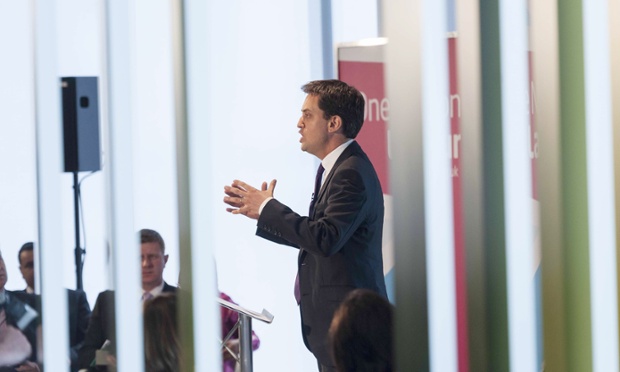
Collectors's item: George Galloway speaking in parliament

… his job.

George Galloway has missed 87% of all Commons votes during his first year as a Bradford MP and spoken in just seven debates.

Data compiled on website theyworkforyou.com shows that Mr Galloway has taken part in just 13% of the votes over the past year. Most MPs average between 70 and 80%.

He has spoken in just seven debates – the average for MPs being around 30.

Can I respectfully suggest that Mr Galloway spends a bit less of his time in Newham and a lot more of it in parliament working for his constituents? After all, that’s what they elected him to do.

Image

Wales will go on… and on

8 Apr

Wales will go on… and on

This month Newham Labour party is holding ‘trigger ballots’ to decide if they want to run a full, open selection process to pick their candidate in next year’s mayoral election. The alternative is simply to let Sir Robin run again.

The results thus far have been depressingly predictable. Sir Robin will not be challenged.

He will be Labour’s candidate next May and he will be mayor for another 4 years.

Not wanted here

6 Mar

Here’s a small but important fact about Newham: unlike several of our neighbouring boroughs, no candidate from a fascist party has ever been elected to office.

In fact, there hasn’t even been a BNP candidate on the ballot for a council election since 2002.

Whatever else you may want to criticise our mayor for (and there’s plenty) this is one thing he can be rightly proud of. Despite ongoing economic deprivation, under-funding from central government and an ever-evolving racial mix the far right has never managed to gain a foothold here on his watch.

But while the BNP is nowhere to be seen, there are others who see political advantage in spreading fear and suspicion, people who see an opportunity for personal gain in sowing the seeds of hatred and division. We must reject them too.

Things George Galloway doesn’t do

25 Feb

Things we now know the  self-declared hero of the Newham Spring, George Galloway, doesn’t do:

  • drink alcohol
  • ask permission “prior to every insertion”
  • debate Israelis

Please let me know in the comments if there’s anything else I’ve missed.

UPDATE: The student who organised the debate has written an open letter to Galloway, saying the MP’s actions left him feeling “humiliated in front of a room full of people who had waited an hour and a half” to see the debate. He rejects Galloway’s claims that he had been “misled” and “deceived” about his opponent.

So far Galloway has not responded, so maybe “apologise” and “act with grace and humility” are two more things we can add to the list of things George doesn’t do.

This man wants to save Newham from dictatorship

12 Feb

One of these men is a posturing self-publicist. The other is Pete Burns.

George Galloway wants to free Newham from the shackles of the hated Wales dictatorship. He is promising a “Newham Spring” that will sweep Sir Robin from power and install, er, George Galloway in his place.

In a video released on YouTube he says, “New Labour has absolute power in Newham. It holds every single council seat which is unhealthy in any society and it has the all powerful office of Mayor year after year.”

A true believer in the benefits of multi-party democracy! It’s such a shame he never mentioned it when he met Saddam Hussain:

Sir, I salute your courage, your strength, your indefatigability, and I want you to know that we are with you, until victory, until victory, until Jerusalem!

Or when he heaped praise on the blood-soaked head of Bashar al-Assad:

All dignified people in the world, whether Arabs or Muslims or others with dignity, are very proud of the speech made by president Bashar al-Assad a few days ago here in Damascus. For me he is the last Arab ruler, and Syria is the last Arab country. It is the fortress of the remaining dignity of the Arabs, and that’s why I’m proud to be here.

Much as I would love to see the back of Robin Wales I won’t be taking any lessons in dealing with dictators from George Galloway.

Newham vs Newham

6 Feb
Newham_vs_newham

Yesterday’s debate in parliament about marriage equality included the following exchange between Newham’s two MPs, who are on different sides of the argument:

Stephen Timms (East Ham) (Lab):

The Church of England was the custodian of marriage in Britain for hundreds of years. For many people, it still is.

The 1662 version of the Church of England service, which has been in use for the past 350 years, sets out three reasons for marriage. The first is that it was “ordained for the procreation of children, to be brought up in the fear and nurture of the Lord”.

The central problem with the Bill is that it introduces a definition of marriage that includes the second and third reasons but drops that first one. The result is something that is a good deal weaker than the original.

Lyn Brown (West Ham) (Lab):

My right hon. Friend was at my wedding. I was not young when I got married, and unless I had been blessed like Elizabeth, it was highly unlikely that I was going to be able to procreate after all that time. Is he telling me that my marriage is less valid than anybody else’s?

Stephen Timms:

No, I am certainly not. I was delighted to attend my hon. Friend’s wedding. The reason that I have just cited was applicable 351 years ago as well, but the Church of England service still applies.

Children are at the heart of marriage but they are barely mentioned in the Bill. It aims to open up the benefits of marriage to people who are excluded from it at the moment, but it does so at the price of taking away a significant part of the meaning of marriage. Children are the reason that marriage has always been so important… it is right for society to recognise—as marriage does—the value to all of us of the contribution of those who bring children into the world and bring them up. That is the ideal that the current definition of marriage reflects, and it would be a mistake to lose the value that that definition places on the creation and bringing up of children.

Like Lyn Brown, I am married but childless. And I am pleased that she stood up to Timms on behalf of all of us in that happy condition.

Human Rights Day

10 Dec

Today is the 64th anniversary of the adoption of the Universal Declaration of Human Rights. Yet last week 72 Tory MPs voted for a bill that would repeal the Human Rights Act 1998. Happily they were soundly defeated.

But the question remains, what is it about human rights that these people object to?

In 2009 Lord Bingham, the first judge in modern times to be appointed as both master of the rolls and as lord chief justice, gave the keynote speech at Liberty’s 75th Anniversary Conference, in which he expressed dismay that anyone would seek to remove or weaken such fundamental rights:

The rights protected by the [European] Convention and the [Human Rights] Act deserve to be protected because they are, as I would suggest, the basic and fundamental rights which everyone in this country ought to enjoy simply by virtue of their existence as a human being. Let me briefly remind you of the protected rights, some of which I have already mentioned. The right to life. The right not to be tortured or subjected to inhuman or degrading treatment or punishment. The right not to be enslaved. The right to liberty and security of the person. The right to a fair trial. The right not to be retrospectively penalised. The right to respect for private and family life. Freedom of thought, conscience and religion. Freedom of expression. Freedom of assembly and association. The right to marry. The right not to be discriminated against in the enjoyment of those rights. The right not to have our property taken away except in the public interest and with compensation. The right of fair access to the country’s educational system. The right to free elections.

Which of these rights, I ask, would we wish to discard? Are any of them trivial, superfluous, unnecessary? Are any them un-British? There may be those who would like to live in a country where these rights are not protected, but I am not of their number. Human rights are not, however, protected for the likes of people like me – or most of you. They are protected for the benefit above all of society’s outcasts, those who need legal protection because they have no other voice – the prisoners, the mentally ill, the gipsies, the homosexuals, the immigrants, the asylum-seekers, those who are at any time the subject of public obloquy.

So, if you are unfortunate enough to live in a constituency represented by one of the 72 anti-Human Rights MPs, I would urge you to take the time to write and ask them which of the fundamental basic rights enshrined in the European Convention and the Act they would like to do away with; which of them do they consider unnecessary?

Those of us living in Newham are lucky in at least one respect – both of our MPs turned out to vote against the stupid and shameful repeal bill. I don’t often applaud Lyn Brown and Stephen Timms, but on this occasion I do.

Roll of Shame

4 Dec

The following members of parliament voted today in favour of a bill to repeal the Human Rights Act 1998:

  • Aldous, Peter
  • Amess, Mr David
  • Bacon, Mr Richard
  • Barclay, Stephen
  • Baron, Mr John
  • Bingham, Andrew
  • Binley, Mr Brian
  • Blackman, Bob
  • Blunt, Mr Crispin
  • Bray, Angie
  • Bridgen, Andrew
  • Byles, Dan
  • Cairns, Alun
  • Cash, Mr William
  • Clappison, Mr James
  • Davies, David T. C. (Monmouth)
  • Davies, Philip
  • Doyle-Price, Jackie
  • Duddridge, James
  • Elphicke, Charlie
  • Evans, Graham
  • Field, Mark
  • Griffiths, Andrew
  • Halfon, Robert
  • Henderson, Gordon
  • Herbert, rh Nick
  • Holloway, Mr Adam
  • Howarth, Sir Gerald
  • Jackson, Mr Stewart
  • Jenkin, Mr Bernard
  • Johnson, Gareth
  • Jones, Mr Marcus
  • Leadsom, Andrea
  • Lilley, rh Mr Peter
  • Lumley, Karen
  • Main, Mrs Anne
  • McCartney, Jason
  • McCrea, Dr William
  • McPartland, Stephen
  • Metcalfe, Stephen
  • Mills, Nigel
  • Mitchell, rh Mr Andrew
  • Morris, Anne Marie
  • Morris, David
  • Mosley, Stephen
  • Murray, Sheryll
  • Nuttall, Mr David
  • Offord, Dr Matthew
  • Parish, Neil
  • Phillips, Stephen
  • Pincher, Christopher
  • Reckless, Mark
  • Rees-Mogg, Jacob
  • Robertson, Mr Laurence
  • Rosindell, Andrew
  • Shannon, Jim
  • Simpson, David
  • Smith, Henry
  • Spencer, Mr Mark
  • Stewart, Iain
  • Stuart, Mr Graham
  • Tomlinson, Justin
  • Turner, Mr Andrew
  • Vickers, Martin
  • Walker, Mr Charles
  • Walker, Mr Robin
  • Weatherley, Mike
  • Wheeler, Heather
  • Whittaker, Craig
  • Whittingdale, Mr John
  • Wiggin, Bill
  • Wollaston, Dr Sarah

Tellers:??? Peter Bone and Philip Hollobone

The bill was defeated by 195 votes to 72.

Source: Hansard

A backdoor subsidy for local newspapers

23 Nov

Last week I attended the GovDelivery Annual conference at the National Audit Office. The theme of the conference was digital government communications.

One of the speakers was Dr. Jonathan Carr-West, Director of Policy, at the Local Government Information Unit (LGiU), who shared some scary and alarming research on statutory notice publications.

He revealed that across the country councils spend up to £67.85m (or an average of £181,000 per authority) every year publishing public notices in local newspapers. This is not something they have any choice about: councils have a statutory duty.

Of course, local newspaper owners know this and exploit it to the full. There is evidence that the individual cost of publishing a notice can be upwards of three times that for a normal advert, reaching over £20 per column centimetre in some publications.

This is a lot of money, especially when councils are trying desperately to find savings. It is also an outdated system that has been left behind by technological advances. Furthermore, it ignores the fact that the audience – that’s local people like you and me –  is moving away from printed newspapers, to a varied digital media landscape.

Councils know this. They know that printed notices in local papers are inefficient and a waste of money. They know no-one reads them and they know that almost no-one ever responds to them.

I have submitted a Freedom of Information request to Newham council, asking how much they spend on these notices and how many responses they have generated. My aim isn’t to embarrass the council: for once they are wasting money and it’s not their fault! As a citizen it offends me that public money is being handed over as a back-door subsidy to newspaper proprietors. I want information I can give my local councillors to persuade them to lobby the mayor, and for him in turn to lobby central government to change the law on public notices.

The coalition government says it believes in localism and that it wants councils to deliver value for money. Well it could prove it by changing the law to free up councils to decide, based on their local online and offline ecosystem, where best to place public notices. They should de-jargonise the content of public notices so ordinary people can understand what the hell they’re about. And they should allow immediate online response – click a button, fill in a form!

Allowing councils to spend a little bit of money with hyperlocal news and community websites would provide a real boost to the sector and lead to significant growth in the number and quality of these sites, while still delivering large savings.

Taking it one step further forwards, the Department for Communities and Local Government should look at developing a central online portal for publication of statutory notices. You could sign-up for automatic email alerts for new notices from your local authority, or subscribe to an RSS feed. The Scottish Government has already partnered with local authorities to produce TellMeScotland, which would be easy to replicate.

You can see Jonathan Carr-West’s presentation online and download a full copy of the LGiU report on public notices.


Revised proposals for new parliamentary constituencies

16 Oct

Following a public consultation the Boundary Commission for England has submitted revised proposals for new parliamentary constituencies which, if approved, will come into force for the 2015 general election. A key part of the brief was to reduce the total number of constituencies from 650 to 600 and to equalise (as far as possible) the number of electors in each one.

Under these proposals Newham would be split into 3 constituencies, 2 of which would also include wards from neighbouring boroughs.

The new constituences would be:

I’d spend a bit of time explaining what this means in practice if it wasn’t a complete waste of time. Following the Tories’ decision to torpedo reform of the House of Lords these proposals stand almost no chance of being passed. Labour opposes them fundamentally and the Lib Dems are sufficently pissed off about the death of Lords reform (coming after their monumental shafting in the AV referendum) that they will vote them down too.

The Tories may hope that a deal on state funding of political parties (‘cash for seats’) will bring their colaition partners into line, but Clegg must know that would be political suicide. What’s the point of cash for seats if you have no, er, seats?