

via Instagram
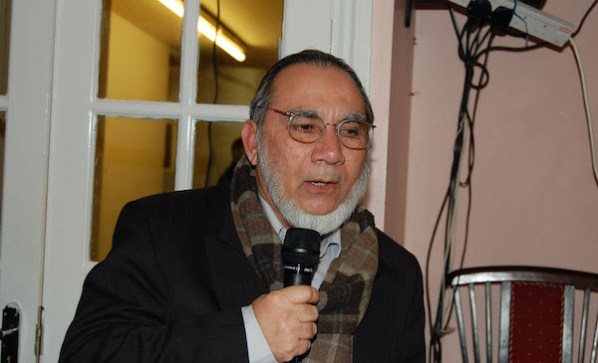
Former councillor Abdul Karim Sheikh
Tributes were paid this week to Abdul Karim Sheikh, former councillor and ceremonial mayor of Newham, who has sadly passed away at the age of 82 having contracted Covid-19.
On Twitter Newham Jack (who he?) asked ‘Is he the only person to have stood for election in Newham representing four different political parties?’
While I don’t know the answer to that I can confirm his political career did indeed span standing for four very different parties.
He first stood for the council in Plashet ward in 1986 for the Independent Newham Broad Alliance. He finished in last place with 401 votes.
By 1990 he had joined Labour and was selected to contest Kensington ward, where he romped home with a majority of 1,300. He switched to St Stephens ward in 1994, winning re-election easily. In 1998 he was selected for Upton ward; as no other party put up a candidate the Labour slate was returned unopposed.
2002 saw him stand for the last time on the Labour ticket, this time in Green Street West. He defected to Respect in 2005.
In an interview with Socialist Worker he explained
The new system of a directly elected mayor, brought in four years ago, has changed the council into a dictatorship. The mayor, Robin Wales, was originally against the mayor plan, but changed his mind after the referendum.
I left the Labour Party and joined Respect last year, partly because I felt councillors were no longer listened to.
The system takes power away from even elected members of the council. That’s why Respect is talking about trying to reverse this system.
Cllr Sheikh was narrowly re-elected in Green Street West for his new party in 2006 alongside Hanif Abdulmuhit, who has since returned to the Labour Party.
He left the council in 2010 after Respect were heavily defeated.
2014 saw him try again in Green Street West. This time for the Conservatives. He was unsuccessful, trailing the winning Labour candidates by more than 1,500 votes. He contested the 2018 election for the Tories again and, completing the circle started 32 years before, he came last.
One man, four parties. Perhaps a unique contribution to local politics.

Mehmood Mirza (right) with Peter Willsman in September 2018
Alternative ‘news’ site The Skwawkbox is reporting that West Ham CLP membership officer Mehmood Mirza has been suspended from the Labour Party after a compliant about his conduct. Mirza is currently running for a seat on the party’s national executive committee as the BAME representative.
According to The Swawkbox
Mehmood Mirza, who received 75 nominations from local parties, would be unable to publicise the nature of the complaint because of Labour’s confidentiality requirements. However, while the precise nature of the complaint is unknown, a Labour source has told the SKWAWKBOX that parts relate to Mirza applauding a speaker’s comments at a Labour Party meeting and walking around a meeting after members were asked to remain seated.
The SKWAWKBOX also understands that Mirza’s supporters allege that the complaint was lodged by a figure on the left of the party.
Two hours before Mirza received notification from the party, he received a call from the right-wing Telegraph newspaper asking him to comment on the complaint.
The story has indeed reached the Telegraph, although it is less certain about his suspension
Mehmood Mirza, the frontrunner to become the next BAME representative on Labour’s ruling body, was reported for posting an allegedly anti-Semitic cartoon on Facebook.
The member of public who reported Mr Mirza, the vice chair of the West Ham Labour party, has not heard back from the party despite the complaints being initially made in October last year.
The cartoon in question, which Mr Mirza shared on his Facebook page, depicted a sticker with the words “anti-Semitism” being placed across the mouth of a man who has a “free Palestine” band around his head.
The cartoon was created by Carlos Latuff, a Brazillian artist who has previously been accused of creating anti-Semitic content by the Simon Wiesenthal Centre, the human rights organisation.
… Mr Mirza still appears as a candidate on the party’s official website, though The Telegraph understands he may have been suspended.
Whatever the outcome, this will be an embarrassment to those who have endorsed him.
West Ham CLP’s general committee meets on Thursday. If Mirza has been suspended he won’t be able to attend.

No surprises in Newham, as Labour easily held both of the borough’s Parliamentary seats. The party’s share of the vote declined slightly, but neither Stephen Timms nor Lyn Brown will be losing any sleep over that.
Stephen Timms (Labour) – 41,703
Scott Pattenden (Conservative) – 8,527
Michael Fox (Liberal Democrat) – 2,158
Alka Sehgal Cuthbert (Brexit Party) – 1,107
Mike Spracklin (Green Party) – 883
Kamran Malik (Communities United Party) – 250
Labour majority of 33,147
Lyn Brown (Labour) – 42,181
Sara Kumar (Conservative) – 9,793
Eimear O’Casey (Liberal Democrat) – 4,161
Danny Keeling (Green Party) – 1,780
Emma Jane Stockdale (Brexit Party) – 1,679,
Paul Jobson (Christian People’s Alliance) – 463
Humera Kamran (Communities United Party) – 143
Labour majority of 32,388

The Local Government Boundary Commission for England has published its draft proposal for re-warding Newham and it represents a major victory for local campaigners in Maryland. They argued that their community deserved direct representation on the council and the Commission agreed.
When I wrote about the council’s own proposals I expected them to be accepted. I was mostly right – but also quite wrong.
The Boundary Commission has adopted the majority of Newham’s recommendations, but re-drawn the map in the north of the borough to accommodate a new Maryland ward, which extends from Leyton Road in the west to Field Road in the east and takes in the roads around UEL’s Stratford campus in the south. If adopted, it will elect three councillors.
As a result three other wards have significant changes. The proposed Stratford East Village ward is now smaller and renamed Olympic East Village; it will have two councillors. Forest Gate North is also smaller, having lost almost all of the streets off Forest Lane west of the community school. But it gains the parts of the Woodgrange Estate that currently sit in Forest Gate South. The redrawn FGN will elect two councillors. Forest Gate South, shorn of the Woodgrange Estate, the area around the UEL and streets west of Water Lane, is also reduced to two councillors.
Stratford Olympic Park ward will simply be known as Stratford.
For what it’s worth, I think the boundary between the proposed new ward and Forest Gate North is absurd. Even if you accept that Maryland is a distinct community (I am personally unconvinced) there is no way it extends almost the entire length of Forest Lane. A more sensible boundary would be the western edge of Forest Lane Park and the cemetery.
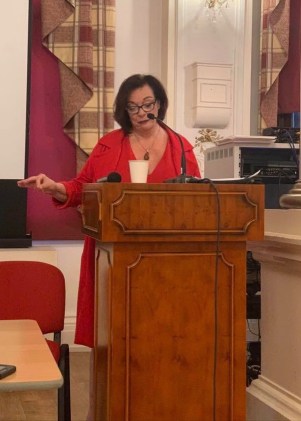
I’d like to thank Anita and Newham Fabians for the invitation and everyone for coming to this event today. I’m so grateful to have an opportunity to take part in this discussion about how our Labour policies can help Londoners and our communities thrive.
As most of you will I hope know I work in the Shadow Treasury team with the fabulous John McDonnell. What I do is social justice and equality.
In London, we see the consequences of inequality and injustice every day. Newham has the worst homelessness in thecountry and shocking numbers of vulnerable people having to sleep rough.
The most vulnerable have been denied a home by the housing crisis. Denied the other support they deserve because of cuts to all of our services and ended up on our street where all their problems can only be exacerbated.
They shouldn’t have to rely on charity to get their lives back. We know only well-funded, totally focused Government action can do that. The kind of action that saw rough sleeping reduced by two-thirds under the last Labour Government[1].
Newham has the highest level of homelessness[2], and appallingly we have the second highest child poverty rate in the country as well. Half our Newham children lived in poverty last year[3]. Half. London as a whole has the highest child poverty rate of any region[4].
And we know what that means – debts and stress over bills that can’t be paid, and rocketing numbers of children homeless in dire temporary accommodation.
Because the rent simply isn’t affordable, social housing is almost non-existent after decades of unreplaced sell-offs, and after Tory cuts, housing benefit simply doesn’t fill the gap.
Dreams are stifled, enormous promise in our community goes unrecognised and unfulfilled, gaping inequalities of class, race, gender, and disability widen.
Worst of all, it means children destitute, going hungry. Last year, you might remember, the headteacher of a primary school in Maryland, just round the corner, she discovered a mum sleeping with her children, in the back alley, behind some bins.
Just a few months later at a visit to a local school, I stupidly remarked to a little girl whose plate was piled high with food ‘that’s a lot of food for such a small person’. She beamed at me and said ‘yes I know, it’s not my turn to eat tonight’.
It’s an utter disgrace that this ever happens in the fifth richest country in the world. But it was quite clear from that conversation that not being able to eat wasn’t a rare event for that little girl, and probably wasn’t a rare event for her friends either.
Because she said it to me, so easily to me, so casually. It had become her normal, and I suspect her friends’ normal as well.
As Labour members, we know poverty and inequality are linked. London doesn’t just have the highest poverty rates, we have the highest inequality as well. 50% of London’s wealth is owned by the richest 10%. The poorest half of us own just 5% of the wealth.[5]
We see this every day. The extraordinary luxury and privilege of a few in the City, sitting cheek by jowl with the deprivation and social exclusion of many in the East End.
In the last year I’ve visited the sparkling new offices of the Financial Conduct Authority. I’ve been awed by some of the developments still going ahead in the Olympic Park, despite Brexit.
And I walk through the Stratford Centre so close by, where rough sleeping, gang exploitation, sexual violence and destitution are a daily reality. Where another young life was ended by violence on Thursday [10th October 2019].
I’ve visited our schools and colleges and been inspired again and again by the resilience and brilliance of our children, and I’ve held parents in my arms after their children have been violently taken from them.
I’ve heard the stories of so many families in my surgery –homeless, mistreated, denied the resources they need to live and the respect they deserve.
These social injustices aren’t equally distributed. Obviously in terms of class, and in terms of race as well. The in-work poverty rate for black British people is 27.5%, more than double that of the rest of the population. And black university graduates face an enormous pay gap because of discrimination and disadvantage: 23.1% less in earnings than their white fellow graduates.[6]
Racial wealth gaps are even wider. For every pound a white British family has in wealth on average, a Pakistani family has around 50p, a Black Caribbean family has around 20p, and Black African and Bangladeshi families both have around 10p.[7]
These social injustices are our challenge. We need to end them, and that’s what we’ll be fighting for in the coming election.
We desperately need to be rid of this Tory Government and keep City Hall Labour – we need Labour in Westminster, in our Councils and in every Combined Authority.
That way we can join up our work against social injustice and make it all the more powerful.
Not just the investment that Sadiq has put into youth services and community policing, but a nationwide youth service commitment and proper police funding across the country.
Because I want those bastards who run county lines and exploit our children caught, charged, and the key thrown away.
We can’t forget that the biggest impact of austerity is a failure to invest in our children and our future. It’s had very unequal, unfair impacts, and I’m afraid we won’t see the full damage for many years to come.
Towards the end of the last Labour Government, we were spending almost 6% of our GDP on publicly funded education and training. By last year, that had fallen to just over 4%—a cut of more than a quarter.
Given the challenges we face, we clearly need far more investment in skills and knowledge, to transform our economy with a green industrial revolution and make it more prosperous but also fairer.
Instead, as we know, during Tory rule school funding per pupil has fallen by 8% in real terms.
The consequences are glaringly obvious.
More than 1,000 schools nationally have had to rely on crowdfunding for basics such as pencils and textbooks.
At least 26 schools are closing their classrooms because they don’t have the money to keep teaching.
The proportion of pupils in supersized classes with more than 31 pupils to a single teacher is at its highest level for 36 years.
The number of pupils doing a GCSE in music has fallen by almost a quarter since 2010, just as industry is asking us for more creativity and collaboration in education, because those skills are needed.
Our further education providers have been cut even more: sixth forms by 21% and FE colleges by 8%.
The Social Mobility Commission found that 41% of FE providers had reduced their careers guidance and 48% their mental health support. I don’t think people get why that’s so important – for class equality, careers guidance is fundamental.
In its report, it also cited evidence that 51% of colleges had stopped teaching modern language courses. So much for a global Britain post-Brexit!
Some 38% of schools and colleges have dropped courses in science, technology, engineering and maths —the courses our economy needs to sustain our green industrial revolution. It’s jaw-dropping that schools and colleges have been forced into that.
We have a recruitment crisis in nursing after the Government scrapped bursaries, and frankly, because of Brexit.
We have a productivity crisis because the Government hasn’t invested in skills. People lucky enough to have a career are struggling to progress at work.
Adult education – so important now that people have to change careers —nobody goes into a job at 18 and stays till in it until they’re 67. But no: funding has been cut in adult education almost in half since 2009-10. Apprenticeship spending has fallen by 44%.
The Open University, which has given a second chance to millions of people, is on its knees because of the Government’s tuition fees regime. Older and part-time learners are simply scared off by the level of debt they’re expected to take on if they want to improve their education or change their course in life.
That’s the situation across the board — cuts, cuts, cuts, and not investment.
What about early years? SureStart has been cut by two thirds since 2010. And 1,000 centres have closed. We know about the amazing benefits of Sure Start.
Just on one measure: Children are almost 20% less likely to be hospitalised by the age of 11 if their family has access to a Sure Start centre – that’s massive – and the most disadvantaged children benefit most.
The impact on the NHS alone of fewer children being hospitalised, is enough by itself to pay for 6% of Sure Start’s costs, and that’s just one impact among many.
The story is the same with youth centres, cut by 40% on average across the country and by as much as 91% in some places.
When investment in youth services is taken away, young people are far more likely to have their lives blighted and their potential wasted by becoming victims of exploitation.
Here in Newham, we know that only too well. Youth centres and youth workers provide young people with spaces away from the county lines groomers on our streets.
Places where young people know they can find an adult to talk to – somebody who can listen to their problems, offer them real resilience against the troubles on our streets and point them towards opportunity.
What is so essential is not the bat and ball and the table tennis in the youth club, but the adult standing on the other side of that table an adult they can trust who can give them different ways of dealing with the so-called ‘elder’ on the street, who grooms that child by offering them chicken to be a lookout for while he sells his drugs.
Good youth work stops children being groomed, stops children’s potential being wasted. We know it’s often the brightest most articulate children they pick on.
And we know those older teenagers seem to offer an alternative economic model.
I can see why that might be appealing, because those teenagers are watching their parents go to work for all the hours God sends and still unable to afford basics let alone luxuries.
The lower quartile rent on a two bed flat in Newham is dearer than the lower quartile earnings for Newham residents. Your whole pay packet in the lower quartile doesn’t cover the lower quartile of rent.
Our children know this is the reality for their parents – low wages, high rents. They live with the stress of poverty and their parents struggling to pay bills day in and day out. They are looking for alternatives.
But a good youth worker can help our young people understand the very dark places that the offer of food and friendship and that alternative economic model can lead to.
If we’d invested earlier, how many of the lives that’ve been blighted by county lines exploitation could have been saved?
We know investment in social infrastructure benefits not only the economy but our society in so many ways for decades into the future.
We don’t just need billions of pounds more investment in social infrastructure, but also to change the way Government works, at every level, so the investment we put in is focused on tackling social injustices, and is there for the long term.
It’s about making sure there are good Labour people in Downing Street AND in City Hall. It’s about giving Boroughs, Cities and towns the space to step up their work against social injustice by restoring and targeting central government funding. But it’s also about joining up our work – national, regional and local. That’s something I’m working on in John’s team.
We’re going to replace the Social Mobility Commission with a Social Justice Commission to investigate the fairness of our society across every policy area, and every kind of injustice: class, race, gender, disability, sexuality.
It has to be about creating fair opportunities for all. We don’t want a grammar school society where some get on and are lauded and applauded. But they have often got on because of luck – being in the right place at the right time. Tokenistic social mobility policies just aren’t enough.
We’ll match our new Commission with co-ordination on social justice across a Labour Government. We’ll have a Minister for Social Justice in our Treasury to drive forward our agenda. And we’ll ensure it’s matched with the levels of investment our communities need.
Cutting poverty and increasing life chances will be core goals. We’ll assess every policy to make sure it plays a part in cutting child poverty and creating a fairer society. We’ll look at new ways of tackling class discrimination and all other forms of inequality.
I believe the first step should be bringing the Socioeconomic Duty from the Equality Act into force. That would mean that every different part of Government – not just Whitehall Departments but councils, health authorities, schools, and the police. All of them will have a duty to consider the impact of their strategic decisions on working class people, and try to reduce socioeconomic inequality.
I’m also looking at the idea of class audits for large companies as well as the gender and race audits we’re already committed to. And we’re considering building protection against class discrimination into the Equality Act as well.
And finally, when it comes to social justice, we won’t mark our own homework; our policies and our statistics will be trustworthy because they’ll be checked from the outside. Part of this is the Social Justice Commission, but another bit could be the Office for Budget Responsibility.
The Tories have used the OBR to turn their budgets into carnivals of cuts. Every time there’s a Budget, the size of the public debt is all the media and unfortunately a lot of the public have talked about. Not the consequences of austerity plans for public services, for our community, for poverty and inequality.
But wouldn’t it be amazing if budgets weren’t just about the numbers – how much spending, how much growth, how much debt. But about how much poverty is being reduced, and how much fairer our society is becoming.
If we made those changes we might find we don’t just have a better policy. We might have a better conversation where it’s easier to win over the people who matter as well: our voters, those people who are going to be determining our marginal seats.
Wouldn’t it be wonderful if they wanted to talk to us about progress on poverty, rather than repeating the kinds of lines that have come out of Tory Governments to shamelessly justify their fiscally failed and socially unjust austerity.
So, comrades, let’s been clear. Our economy does not work for the many in London. I often have to remind colleagues and activists from other places about the huge poverty and social problems we see here every day.
Because London and the South-East are always seen to be receiving more than our fair share from the public purse. And it’s true, we do get a lot of infrastructure investment.
There is regional inequality, and there is also enormous inequality and poverty within our big cities. Labour has to tackle both these problems, and we absolutely can if we work together across the country, and across every level of Government, for the many not the few. Solidarity.
In my previous post I provided an overview of the council’s proposal for redrawing ward boundaries and distributing council seats ahead of the 2022 election.
If the council’s scheme is approved there will be 66 councillors representing 23 wards – 20 of which will elect three councillors each and 3 will elect two.
Let’s take a look at the 23 wards in turn, starting with the new Stratford wards:
Stratford East Village
This is basically the northern half of the current Stratford and New Town ward, covering the East Village development, Westfield shopping centre, the International station and a chunk of older housing on the streets between Leyton Road and Leytonstone Road. It is projected to have an electorate of around 11,500 and will return three councillors. The preponderance of new, more affluent voters living in the apartment buildings of the East Village will make this a tempting target for both the Liberal Democrats and Greens. Indeed, the Lib Dems have submitted their own proposal for an ‘Olympic ward’ covering the East Village, but excluding the older ‘New Town’ area east of Leyton Road.
Stratford Olympic Park
The southern part of the current Stratford and New Town ward, including the London Stadium and the shopping centre, stretching south to Three Mills. It will also take in streets south of Forest Lane and west of Water Lane that are currently in Forest Gate South. The new ward will have 12,600 electors represented by three councillors.
Canning Town
Such has been the pace of development south of the Canning Town flyover that a new three-member ward can be created from the small area bounded by Newham Way, the Jubilee Line, Victoria Dock Road, Munday Road and Radland Road. This compact ward will hold 11,300 voters. As with the East Village, this ward may be an opportunity for someone to break Labour’s complete stranglehold on the council.
Canning Town North
Slightly reduced version of the current ward, but retaining three councillors. Bounded to the north by the District line/C2C railway and to the south by the A13, it takes in West Ham station, the Memorial Ground, Eastlea and Rokeby schools and Rathbone Market. 12,500 voters.
Victoria Dock
This new ward is made up of the western half of the current Royal Docks ward, plus a bit of the old Canning Town South. It will include the whole of the community in Silvertown and Britannia Village on the south of the Royal Victoria Dock. Its northern boundary captures the new developments around the DLR line. Victoria Dock will have 8,500 voters and elect two councillors.
Albert Dock
The other, eastern half of the current Royal Docks, taking in City Airport, the North Woolwich community and the developments around Gallions Reach. The council notes that the boundary between this and Beckton could be problematic due to future developments. It suggests the Boundary Commission may want to take a further look, so this ward may yet change. As currently proposed, its 8266 electors will be represented by two councillors.
Plaistow West
That the council has suggested Canning Town East as an alternative name for this ward tells you a lot about where it is. This new ward is bounded by the A13 to the south and the District line the north, with Plaistow High Street/Greengate Street to the east. Hermit Road and the East London cemetery mark the western edge. The Greenway slices through the ward from east to north-west. 11,673 voters will elect three councillors.
Plaistow North
This ward most obviously breaks the council’s own rules about ‘impermeable boundaries’. The District line splits it in two and there is only one crossing point to move from the southern to the northern half. The southern part sits between Plaistow High Street/Greengate Street and Green Street (up to and including Queens Market), north of Barking Road. The northern portion is south of Plashet Road, to either side of Stopford Road. The three councillor ward holds 11,300 voters.
Plaistow South
A rejigged version of the current ward, taking in part of the old Canning Town South ward, so that its western boundary is now New Barn Street. It takes in the area between Barking Road and the A13, with Prince Regent Lane running more or less through the middle. The south east quarter of the ward covers Newham University Hospital, Cumberland School and Newham Leisure Centre. It’s 11,300 electors will be represented by three councillors.
Custom House
Although there is an existing Custom House ward, it is quite different to the one proposed by the council. It takes in the eastern half of the Old Canning Town South and the western half of the current Custom House. The A13 provides the northern boundary and the Excel Centre sits to the south. To the north east the council has opted not to use Beckton District Park as a boundary and therefore residents around Sheerwater Road and Fulmer Road will find themselves in Beckton ward rather than Custom House. This 12,600 voter ward will return three councillors.
Beckton
The geographically largest ward in the borough is mostly unaltered, bar the changes with Custom House mentioned above and a small number of properties going into the new Albert Dock ward. With 12,729 voters returning three councillors, Beckton is at the outer edge of acceptable electoral variance (+9%).
Boleyn
This densely populated ward covers the area north and south of the old West Ham football ground – now a new housing development. There are some small boundary changes from the existing ward, which ‘improve electoral equality’. Just over 11,000 electors and three councillors.
West Ham
No changes from the current boundaries. 10,800 voters, electing three councillors.
Forest Gate South
Apart from the loss of a few streets west of Water Lane to the new Stratford Olympic Park ward, Forest Gate South remains unchanged. Water Lane now forms a distinct boundary between Forest Gate and Stratford. FGS retains three councillors, who will be elected by around 11,500 voters.
Forest Gate North
No changes to this three councillor ward, which is home to 11,329 electors.
Green Street West
Another ward with no changes. With just 10,600 voters and three councillors it is at the margin of acceptable electoral variation (10%). The council says it is difficult to identify changes that would improve this.
Green Street East
Remains within unchanged boundaries. It’s electoral variance is -9% (10,695 voters and three councillors)
Manor Park
Popcorn time for Labour watchers. This ward is reduced in size with properties furthest from the centre moving to Little Ilford and Plashet wards, leaving just 8,300 electors. As a result, it will only have two councillors and one of the current three will have to look elsewhere for a seat.
Little Ilford
Unchanged, bar the addition of First Avenue and streets to the east, and a section of Romford Road from Manor Park. The reconfigured three-councillor ward will have 12,200 voters.
Plashet
The ward previously known as East Ham North gains a few properties from Manor Park (Monega Road and parts of Shrewsbury Road and High Street North), but is otherwise unchanged. 12,150 voters with three councillors.
East Ham
The new name for East Ham Central. This ward covers the area either side of the High Street, south of the District line and encompasses the main shopping area, the old Town Hall and Central Park. To improve ‘electoral equality’ there are some minor changes to the boundary with Burges ward (or Wall End, as it is currently known). East Ham ward will have 11,770 voters and three councillors.
East Ham South
The ward takes in a few streets on its western boundary from Boleyn, but is otherwise unchanged. It covers the residential areas either side of High Street South down to the A13. It is projected to contain 11,791 voters and will be represented by three councillors.
And finally…
Burges
The current Wall End ward, with the addition of Keppel Road, Streatfield Road, Latimer Road and Altmore, plus properties on the north side of Barking Road east of Keppel Road (all from East Ham Central). I have no idea why Burges is a better name than Wall End for this ward – does it have some local significance? 11,500 Burges-ites will have three councillors representing them.


 forestgatedotnet