Archive | Politics RSS feed for this section

Ed urges living wage, but Sir Robin isn’t listening

6 Jun

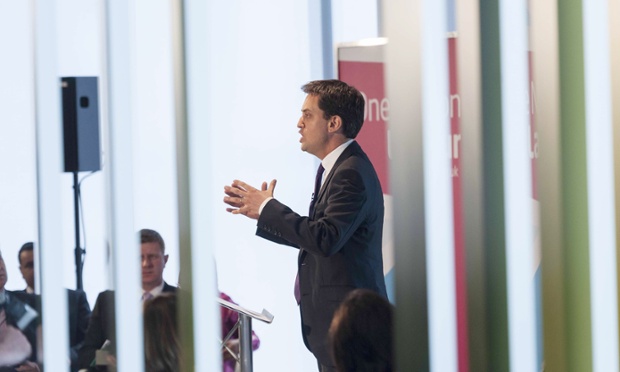
Today Ed Miliband made his big speech on social security reform. He did so at Newham Dockside, the £110 million headquarters of Newham council.

He talked – rightly – about reducing the social security bill by increasing the number of people in work and by making sure that work pays. Too many employers rely on the taxpayer to subsidise poverty wages. People need to be able to earn a living wage.

Today, people often don’t get paid enough in work to make ends meet.

And the taxpayer is left picking up the bill for low pay.
 We must change our economy, so that welfare is not a substitute for good employment and decent jobs…

Today in Britain almost three million men and women and almost one and half million children live in families that are going to work and are still not able to escape poverty.

People doing the right thing, trying to support themselves and their children.

The last Labour government took action on this, and was right to provide tax credits for those in work. 

But we didn’t do enough to tackle Britain’s low wage economy, a low wage economy that just leaves the taxpayer facing greater and greater costs subsidising employers…

We will do everything in our power to promote the living wage.

If local councils can say “if you want a contract with the council then you need to pay the living wage,”  then central government should look at doing that too.

Absolutely right. But his point was embarrassingly undermined by his choice of venue. Despite Labour having 100% control of the council, Newham is not a Living Wage Accredited Employer.

This is a disgrace. Our councillors should be embarrassed. And ashamed.

Of power and patronage

29 Apr


Hands up who wants Sir Robin to be mayor for another four years?

On Friday it was announced, to no surprise whatsoever, that Sir Robin Wales had been re-selected as Labour’s candidate for Mayor of Newham.

Given the choice in a ‘trigger ballot’ between keeping the incumbent and running an open selection process, party members chose not to give themselves a choice. It’s a deeply depressing decision.

Writing for Left Futures back in January Jon Lansman asked why Labour’s most powerful politicians – its directly elected mayors – are the least accountable and explained why it was inevitable that Sir Robin and the other incumbent mayors would win these ‘trigger ballots’:

Because they have no challengers.

Why do they have no challengers? Because as well as the power and the patronage, they can carry on long as they wish. It’s a vicious circle.

Of course, each Mayor has their own personal style and different levels of willingness to tolerate criticism. But the value of the patronage in these boroughs is far more significant than in Parliament where MPs are paid a minimum of £65,738. In Newham, London’s poorest borough, the £15,856 which Sir Robin Wales dispenses (on average), in addition to their basic allowance of £10,829, to 29 of Newham’s 60 Labour councillors (there is no opposition) is not chicken feed. For many, it is their only or main income. How likely is it that a Cabinet member who is full-time, dependent on their allowances of £41,871, will take on Sir Robin in Cabinet or Labour Group never mind in a contest to be a mayoral candidate?

So, in essence, Sir Robin has ensured the loyalty and compliance of those around him. Put simply, those most likely to offer a realistic challenge have the most to lose from making one. And they know Sir Robin is ruthless in his treatment of dissent.

Lansman concluded:

The least that Labour’s executive could do is to ensure that if Mayors are allowed to serve a fourth term, they should at least face a full selection procedure.

Sadly, Labour passed up that opportunity and agreed to the trigger ballot process. With the inevitable outcome.

Turn again, Robin Wales

15 Apr

Despite being on the verge of re-selection – unopposed, of course – as Labour’s candidate for Mayor of Newham in next year’s local elections, Sir Robin Wales wants to be mayor of London.

What’s interesting for Newham people – apart from the happy prospect of waving goodbye to the Dear Leader – is that the London elections are in 2016, exactly halfway through Sir Robin’s next term.

When Labour selected Ken Livingstone as candidate for the 2012 election it did so in the autumn of 2010, a full 21 months ahead of time. And this was following a 3-month campaign in which he defeated former Bethnal Green MP Oona King.

Assuming the London Labour party follows the same timetable, Sir Robin would start his campaign for the nomination barely a month after being re-elected in Newham. If he won that he’d face a long slog round London raising his profile among the voters of the other 31 boroughs.

How much time will he have left to do the job he’s being paid £81,000 a year by Newham council tax payers for?

If I were a Labour party member who’d just cast his vote in the ‘trigger’ ballots I’d be a bit pissed off to discover, just a few weeks later, that our candidate is no longer that interested in the job – that he hopes to serve just half his term before resigning in favour of something bigger and better. And that he’s unlikely to devote much of his time to Newham.

I might also wonder if we have to have an open process to select a candidate for the mayoral by-election in 2016, why not save ourselves the trouble and select someone now who will serve a full four years?

Something else George Galloway doesn’t do…

11 Apr

Collectors's item: George Galloway speaking in parliament

… his job.

George Galloway has missed 87% of all Commons votes during his first year as a Bradford MP and spoken in just seven debates.

Data compiled on website theyworkforyou.com shows that Mr Galloway has taken part in just 13% of the votes over the past year. Most MPs average between 70 and 80%.

He has spoken in just seven debates – the average for MPs being around 30.

Can I respectfully suggest that Mr Galloway spends a bit less of his time in Newham and a lot more of it in parliament working for his constituents? After all, that’s what they elected him to do.

Image

Wales will go on… and on

8 Apr

Wales will go on… and on

This month Newham Labour party is holding ‘trigger ballots’ to decide if they want to run a full, open selection process to pick their candidate in next year’s mayoral election. The alternative is simply to let Sir Robin run again.

The results thus far have been depressingly predictable. Sir Robin will not be challenged.

He will be Labour’s candidate next May and he will be mayor for another 4 years.

Not wanted here

6 Mar

Here’s a small but important fact about Newham: unlike several of our neighbouring boroughs, no candidate from a fascist party has ever been elected to office.

In fact, there hasn’t even been a BNP candidate on the ballot for a council election since 2002.

Whatever else you may want to criticise our mayor for (and there’s plenty) this is one thing he can be rightly proud of. Despite ongoing economic deprivation, under-funding from central government and an ever-evolving racial mix the far right has never managed to gain a foothold here on his watch.

But while the BNP is nowhere to be seen, there are others who see political advantage in spreading fear and suspicion, people who see an opportunity for personal gain in sowing the seeds of hatred and division. We must reject them too.

Things George Galloway doesn’t do

25 Feb

Things we now know the  self-declared hero of the Newham Spring, George Galloway, doesn’t do:

  • drink alcohol
  • ask permission “prior to every insertion”
  • debate Israelis

Please let me know in the comments if there’s anything else I’ve missed.

UPDATE: The student who organised the debate has written an open letter to Galloway, saying the MP’s actions left him feeling “humiliated in front of a room full of people who had waited an hour and a half” to see the debate. He rejects Galloway’s claims that he had been “misled” and “deceived” about his opponent.

So far Galloway has not responded, so maybe “apologise” and “act with grace and humility” are two more things we can add to the list of things George doesn’t do.

This man wants to save Newham from dictatorship

12 Feb

One of these men is a posturing self-publicist. The other is Pete Burns.

George Galloway wants to free Newham from the shackles of the hated Wales dictatorship. He is promising a “Newham Spring” that will sweep Sir Robin from power and install, er, George Galloway in his place.

In a video released on YouTube he says, “New Labour has absolute power in Newham. It holds every single council seat which is unhealthy in any society and it has the all powerful office of Mayor year after year.”

A true believer in the benefits of multi-party democracy! It’s such a shame he never mentioned it when he met Saddam Hussain:

Sir, I salute your courage, your strength, your indefatigability, and I want you to know that we are with you, until victory, until victory, until Jerusalem!

Or when he heaped praise on the blood-soaked head of Bashar al-Assad:

All dignified people in the world, whether Arabs or Muslims or others with dignity, are very proud of the speech made by president Bashar al-Assad a few days ago here in Damascus. For me he is the last Arab ruler, and Syria is the last Arab country. It is the fortress of the remaining dignity of the Arabs, and that’s why I’m proud to be here.

Much as I would love to see the back of Robin Wales I won’t be taking any lessons in dealing with dictators from George Galloway.

Newham vs Newham

6 Feb
Newham_vs_newham

Yesterday’s debate in parliament about marriage equality included the following exchange between Newham’s two MPs, who are on different sides of the argument:

Stephen Timms (East Ham) (Lab):

The Church of England was the custodian of marriage in Britain for hundreds of years. For many people, it still is.

The 1662 version of the Church of England service, which has been in use for the past 350 years, sets out three reasons for marriage. The first is that it was “ordained for the procreation of children, to be brought up in the fear and nurture of the Lord”.

The central problem with the Bill is that it introduces a definition of marriage that includes the second and third reasons but drops that first one. The result is something that is a good deal weaker than the original.

Lyn Brown (West Ham) (Lab):

My right hon. Friend was at my wedding. I was not young when I got married, and unless I had been blessed like Elizabeth, it was highly unlikely that I was going to be able to procreate after all that time. Is he telling me that my marriage is less valid than anybody else’s?

Stephen Timms:

No, I am certainly not. I was delighted to attend my hon. Friend’s wedding. The reason that I have just cited was applicable 351 years ago as well, but the Church of England service still applies.

Children are at the heart of marriage but they are barely mentioned in the Bill. It aims to open up the benefits of marriage to people who are excluded from it at the moment, but it does so at the price of taking away a significant part of the meaning of marriage. Children are the reason that marriage has always been so important… it is right for society to recognise—as marriage does—the value to all of us of the contribution of those who bring children into the world and bring them up. That is the ideal that the current definition of marriage reflects, and it would be a mistake to lose the value that that definition places on the creation and bringing up of children.

Like Lyn Brown, I am married but childless. And I am pleased that she stood up to Timms on behalf of all of us in that happy condition.

Human Rights Day

10 Dec

Today is the 64th anniversary of the adoption of the Universal Declaration of Human Rights. Yet last week 72 Tory MPs voted for a bill that would repeal the Human Rights Act 1998. Happily they were soundly defeated.

But the question remains, what is it about human rights that these people object to?

In 2009 Lord Bingham, the first judge in modern times to be appointed as both master of the rolls and as lord chief justice, gave the keynote speech at Liberty’s 75th Anniversary Conference, in which he expressed dismay that anyone would seek to remove or weaken such fundamental rights:

The rights protected by the [European] Convention and the [Human Rights] Act deserve to be protected because they are, as I would suggest, the basic and fundamental rights which everyone in this country ought to enjoy simply by virtue of their existence as a human being. Let me briefly remind you of the protected rights, some of which I have already mentioned. The right to life. The right not to be tortured or subjected to inhuman or degrading treatment or punishment. The right not to be enslaved. The right to liberty and security of the person. The right to a fair trial. The right not to be retrospectively penalised. The right to respect for private and family life. Freedom of thought, conscience and religion. Freedom of expression. Freedom of assembly and association. The right to marry. The right not to be discriminated against in the enjoyment of those rights. The right not to have our property taken away except in the public interest and with compensation. The right of fair access to the country’s educational system. The right to free elections.

Which of these rights, I ask, would we wish to discard? Are any of them trivial, superfluous, unnecessary? Are any them un-British? There may be those who would like to live in a country where these rights are not protected, but I am not of their number. Human rights are not, however, protected for the likes of people like me – or most of you. They are protected for the benefit above all of society’s outcasts, those who need legal protection because they have no other voice – the prisoners, the mentally ill, the gipsies, the homosexuals, the immigrants, the asylum-seekers, those who are at any time the subject of public obloquy.

So, if you are unfortunate enough to live in a constituency represented by one of the 72 anti-Human Rights MPs, I would urge you to take the time to write and ask them which of the fundamental basic rights enshrined in the European Convention and the Act they would like to do away with; which of them do they consider unnecessary?

Those of us living in Newham are lucky in at least one respect – both of our MPs turned out to vote against the stupid and shameful repeal bill. I don’t often applaud Lyn Brown and Stephen Timms, but on this occasion I do.